


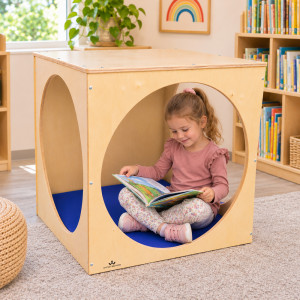

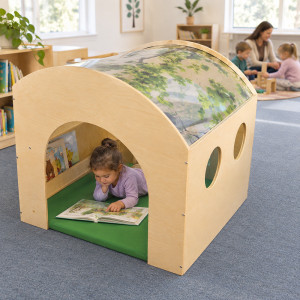
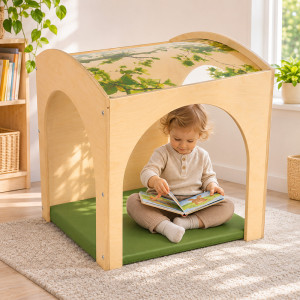
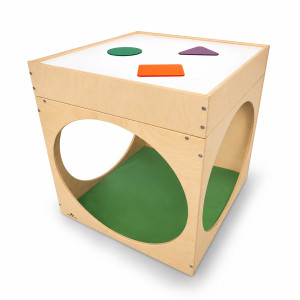
A kids reading nook is a small, partly enclosed space where one or a few children can sit with a book away from the busy part of the room. In a classroom or daycare it also serves as the quiet space: a place to rest, look at pictures or calm down, while staff can still see in. The pieces in this collection are freestanding wooden reading nooks and cubes made by Whitney Brothers in the US, sized for children from about 1 to 6 years.
They differ in size, age group and what they add to a room. Some are simple reading cubes for one or two children. Others have built-in book shelves, a clear roof or a light table on top. The guide below starts with the questions that decide which kids reading nook fits your space.
How to Choose a Kids Reading Nook
- Age and height. Toddlers need a low nook they can crawl into without help. Preschoolers need more headroom to sit up and turn the pages. Check the inside height against the children who will use it.
- How many children at once. A reading cube suits one or two children. A larger reading nook with shelves lets two or three children read together, or a teacher read to a small group at the opening.
- Sightlines. Openings on the sides, cutouts and a clear roof let adults see a child inside from across the room. In early learning programs this matters as much as comfort.
- Book storage. Built-in shelves keep a small, rotating library inside the nook. Without them, a basket of books by the opening works well.
- Floor mat. A wipe-clean mat makes the floor soft and defines the space. Some sets include one, and some sell it separately.
- Footprint. Measure the corner first. A reading cube takes about 30 x 30 in, and the largest nook here needs about 40 x 40 in.
Compare the Models
All sizes below are taken from the manufacturer's specifications, in inches (width x depth x height).
| Model | What it is | Size (in) | Age | Best for |
|---|---|---|---|---|
| Nature View Toddler Reading Retreat | Low nook with a tree canopy roof, mat included | 24 x 23 x 23.5 | 1 to 3 years | Infant and toddler rooms |
| Play House Cube | Reading cube with a removable roof | 29 x 30.5 x 29 | 18 months to 6 years | One or two children, small rooms |
| Superbright LED Creative Cube | Quiet cube with an LED light table on top, mat included | 29 x 30 x 30.5 | 18 months to 6 years | A quiet space and a light station in one footprint |
| Nature View Reading Haven | Large nook with book shelves and a clear canopy roof, mat included | 39.5 x 39 x 38 | 3 to 6 years | Preschool classrooms and libraries |
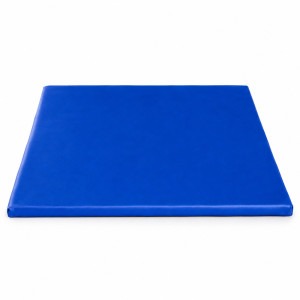
The Play House Cube ships without a mat. The Blue Floor Mat is made to fit inside it. Every piece in this collection is GREENGUARD Gold certified for low chemical emissions.
Reading Nook or Quiet Space?
In a home, a reading nook for kids is mostly about books and comfort. In a classroom or daycare, the same piece usually does a second job as the room's quiet space. Many early learning standards ask programs to offer a place where a child can be alone or with one friend, away from group activity, while staying in view of adults. Whitney Brothers states that the Play House Cube, the Creative Cube and both Nature View sets meet state requirements for a quiet space. Rules differ by state, so confirm the details with your licensing office.
A quiet space works best when children know what it is for. Keep active toys out, add a few books and a soft toy, and let children choose to go in rather than sending them there. Our guide on what a sensory break room is covers the same idea for a separate room.
Setting Up a Kids Reading Nook
Start small. Five to eight books are enough for a kids reading nook, with the covers facing out so young children can choose by picture. Change them every week or with the classroom theme. A cushion or the floor mat, a basket for books and one soft toy make the space inviting without crowding it. Place the nook in a calm part of the room, away from the block area and the door, with the opening facing the main space so staff can see in.
In a sensory room or a larger classroom, the reading nook sits well across the room from active stations. A wall of sensory wall panels for daycare gives children a hands-on choice, while the nook stays the quiet one. For light play inside the same footprint, the Creative Cube has a light table on top, and our light tables for kids collection has standalone tables.
Where These Reading Nooks Are Used
- Daycare centers and Early Head Start. A low reading nook in the infant and toddler room.
- Preschool and pre-K classrooms. The reading corner and the quiet space in one piece.
- Kindergarten. Independent reading during center time.
- Special education classrooms. A predictable place to take a break from noise.
- Therapy and early intervention rooms. A small private space between activities.
- School and public libraries, churches and museums. A destination reading spot in the children's area.
- Homes and playrooms. A book nook for kids that also works as a playhouse.
Safety and Care
Use every piece indoors with adult supervision. Place the reading nook on a level floor, with the openings facing the room. The roofs and tops are not for climbing, sitting or standing. Check the hardware from time to time and tighten fasteners when needed.
Wipe the wood with a soft cloth and a little mild soap and water, then dry it right away. Clean the vinyl mats and clear acrylic parts the same way, and avoid ammonia, alcohol and abrasive cleaners, which can scratch or cloud acrylic.
Frequently Asked Questions About Kids Reading Nooks
What is a kids reading nook?
It is a small, partly enclosed space for one or a few children to read, rest or play quietly. It can be a cube, a canopy nook or a corner with shelves and a soft floor.
What age is each reading nook for?
The Nature View Toddler Reading Retreat is listed for about 1 to 3 years, the Play House Cube and the Creative Cube for about 18 months to 6 years, and the Nature View Reading Haven for 3 to 6 years.
Can staff see a child inside?
Yes. Each model has open sides, cutouts or a clear roof, so adults can see in from the room. Place the opening toward the main space.
Do they meet quiet space requirements?
Whitney Brothers states that these pieces meet state requirements for a quiet space in early learning programs. Requirements vary by state, so confirm with your licensing office.
Is a floor mat included?
The two Nature View sets and the Creative Cube include a mat. The Play House Cube does not, and the Blue Floor Mat is sold separately to fit it.
What warranty do they have?
The wooden furniture is covered by the Whitney Brothers lifetime limited warranty for indoor educational and institutional use. Mats and electrical parts may carry separate coverage. If you plan to use a piece at home, contact us before ordering and we will confirm the coverage. See our Whitney Brothers page for more about the brand.
Can schools order with a purchase order?
Yes. We accept purchase orders, tax-exempt certificates and ACH bank transfers. Lead time and shipping are confirmed with your quote.
Every reading nook in this collection is part of our wider sensory room equipment collection.
Setting up quiet spaces in several classrooms?
Request a Quote