


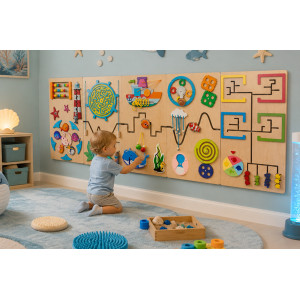
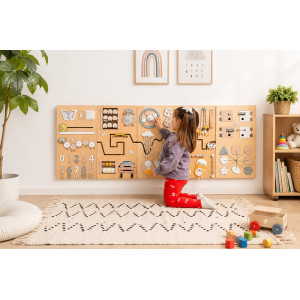


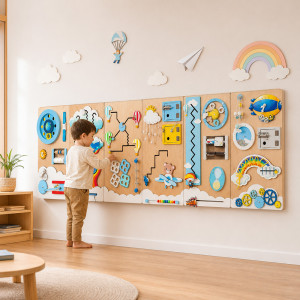

Sensory wall panels for clinics give dental offices, pediatric practices and medical waiting rooms a calm, wall-mounted activity station. It keeps children engaged during appointments and reduces the anxiety that often comes with a waiting room. Many practices search for this as waiting room wall activity toys or waiting room wall toys. It's the same wall-mounted panel of locks, latches, gears and tactile elements, sized and mounted for a clinical reception area rather than a classroom or home playroom.
BumbleBeeSmart panels are handcrafted from birch plywood with non-toxic finishes and mounted directly to the wall. They hold up to the constant turnover of a busy waiting room without losing pieces or needing daily upkeep.
Why sensory wall panels belong in a clinic waiting room
A waiting room is a transitional space - children pass through for minutes, sometimes anxious about the appointment ahead. A wall-mounted panel gives that time a purpose.
Reduces pre-appointment anxiety
A hands-on activity gives children something to focus on besides the appointment itself. Many dental and pediatric practices report calmer check-ins when a sensory wall is part of the waiting room.
No supervision required
Unlike a toy bin, a wall panel needs no handing out and no collecting up. Front-desk staff don't have to manage it between patients.
Durable through constant turnover
A clinic waiting room sees far more hands per day than a home playroom. Locks, latches and gears are mechanically fastened, not glued. They hold up to heavy daily use by different children every few minutes.
Easy to disinfect between patients
Wooden surfaces wipe down with standard clinical disinfectant. There are no fabric elements to launder and no small removable parts to lose. That's a real advantage under clinic infection-control protocols.
What to look for when buying for a clinic
Calm, professional themes
A busy children's theme can work well in a pediatric practice. A general medical or dental waiting room often does better with a calmer palette that suits both children and accompanying adults.
Mounting height and sightlines
Mount at a height accessible to seated and standing children. Ideally, keep it within sight of the front desk so staff can keep half an eye on the area without active supervision.
Safety and materials
Panels should use non-toxic finishes, mechanically fastened elements, and no small parts that could detach. Our sensory wall safety guide covers materials and finishes in detail.
Size for your reception area
Waiting rooms vary widely in size. A small reception nook typically fits 2-3 panels. Larger practices with more seating often use a wider set to give several children a spot at once.
Custom branding and multi-location ordering
Practices with multiple locations often want matching panels across offices, sometimes in colors that fit the practice's branding. Contact us for multi-location and custom color quotes.
Outfitting a waiting room or clinic?
Send us your reception area dimensions and the type of practice - dental, pediatric or general medical. We'll come back with a panel selection, mounting height, and a quote.
Sensory wall panels by practice type
Dental offices
Dental visits are often the most anxiety-provoking for young patients. A sensory wall in the reception area gives children a calming distraction before they're called back. See our in-depth guide to sensory walls for dental clinics: a practical guide.
Pediatric practices
Pediatric waiting rooms typically see the highest child traffic of any clinic setting. A wider panel set with varied elements holds attention across a range of ages, whether children are waiting for well visits or sick appointments. See our guide to sensory walls for pediatric practice waiting rooms.
General medical and specialist offices
Family medicine, orthodontics and specialist practices with any child patients benefit from the same calming effect. A more neutral palette usually suits a mixed adult-and-child waiting area.
Hospital waiting areas
Larger hospital waiting rooms and pediatric departments often need a bigger installation. Multiple panels across a longer wall serve more families at once, sometimes paired with our DIY modular system for an exact-fit layout.
Frequently asked questions about sensory wall panels for clinics
What are waiting room wall activity toys?
Waiting room wall activity toys are wall-mounted sensory panels installed in a clinic reception area. It's the same format as a sensory wall panel, sized and themed for a dental, pediatric or medical waiting room instead of a classroom or home.
Do sensory walls actually help with dental or medical anxiety?
Many dental and pediatric practices report calmer waiting periods and easier check-ins when children have a hands-on activity available. We don't make clinical or medical claims - this is an activity product, not a treatment. But distraction and engagement before an appointment is a widely used, common-sense approach.
How many panels does our waiting room need?
A small reception nook typically fits 2-3 panels. Most dental and general practices use 3-5 panels; busy pediatric practices often use 5-8. Larger hospital waiting areas may need 8 or more, or a DIY modular layout. Send us your space and we'll recommend a count.
Can we get matching panels across multiple office locations?
Yes. We regularly build matching or branded panels for practices ordering across several locations. Contact us with your locations and preferred colors for a quote.
Are these panels safe and easy to clean for a clinical setting?
Yes. Panels are handcrafted from birch plywood with non-toxic finishes, and elements are mechanically fastened. Wooden surfaces wipe down with standard clinical disinfectant. Our sensory wall safety guide covers materials and finishes in detail.