


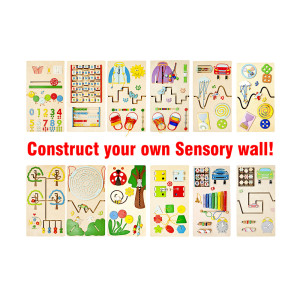
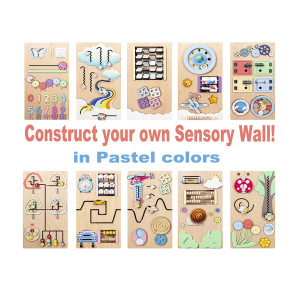
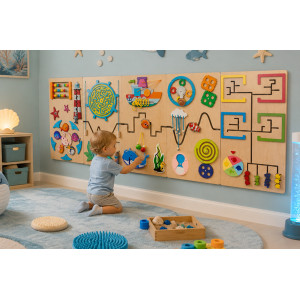


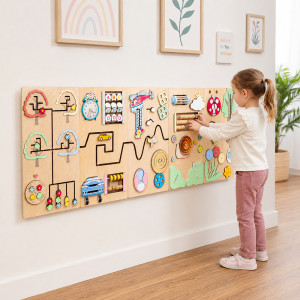

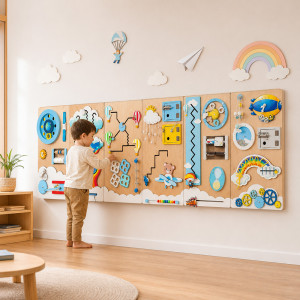


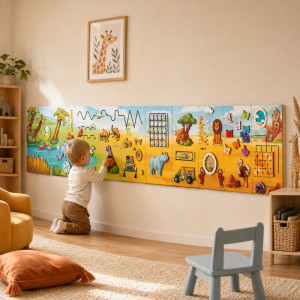

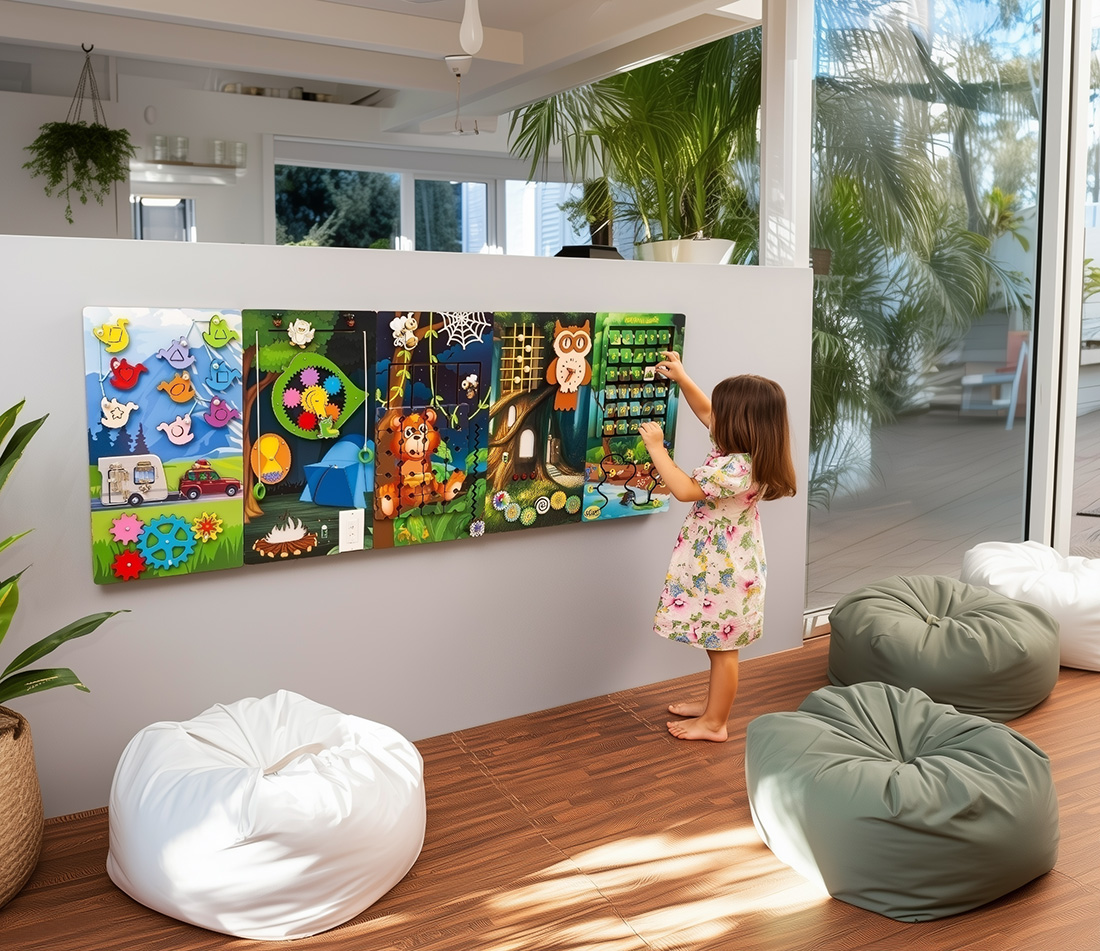
Wall mounted busy boards are interactive activity panels that attach directly to a wall. They give toddlers and preschoolers a permanent, screen-free spot for fine motor play without taking up any floor space. Unlike loose toys that get kicked around a room, a wall-mounted board stays exactly where you put it. It's stable, always available, and ready for more than one child to use at once.
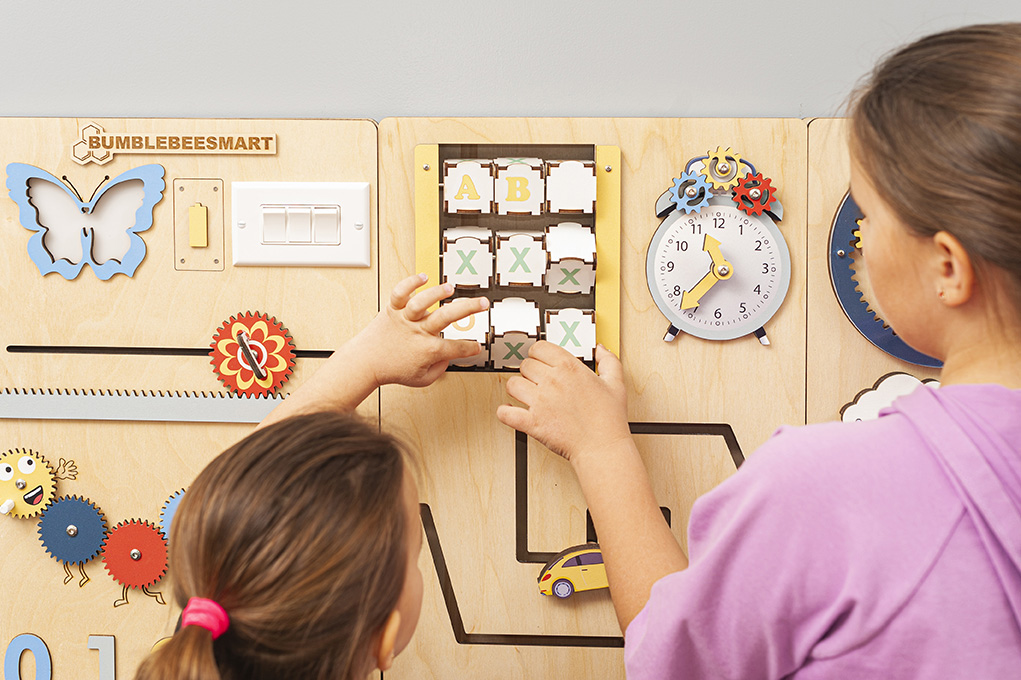
At BumbleBeeSmart we build these boards for homes, preschools, daycare centers, waiting rooms, pediatric clinics and therapy spaces. Each board is handcrafted with interactive elements - locks, latches, gears, spinners, sliders, switches and tactile activities. Everything mounts directly to birch plywood and is finished with non-toxic, water-based paint.
Why choose wall mounting over a tabletop board
A wall-mounted board and a tabletop or floor-standing busy board solve the same problem in different ways. Mounting to the wall changes three things that matter in daily use.
No floor space lost
A wall board occupies zero square footage on the floor. In a small bedroom, a shared classroom, or a clinic waiting room, that difference can decide whether the board fits at all.
Fixed in place, used by more than one child
Because it's bolted to the wall, the board can't be tipped, dragged across the room, or claimed by one child and carried off. Two or three children can use different sections of a wide board at the same time.
Height does the age-matching for you
A tabletop board sits at whatever height the table happens to be. This one mounts exactly where you choose - lower for toddlers, higher for a mixed-age classroom - so it meets the child instead of the other way around.
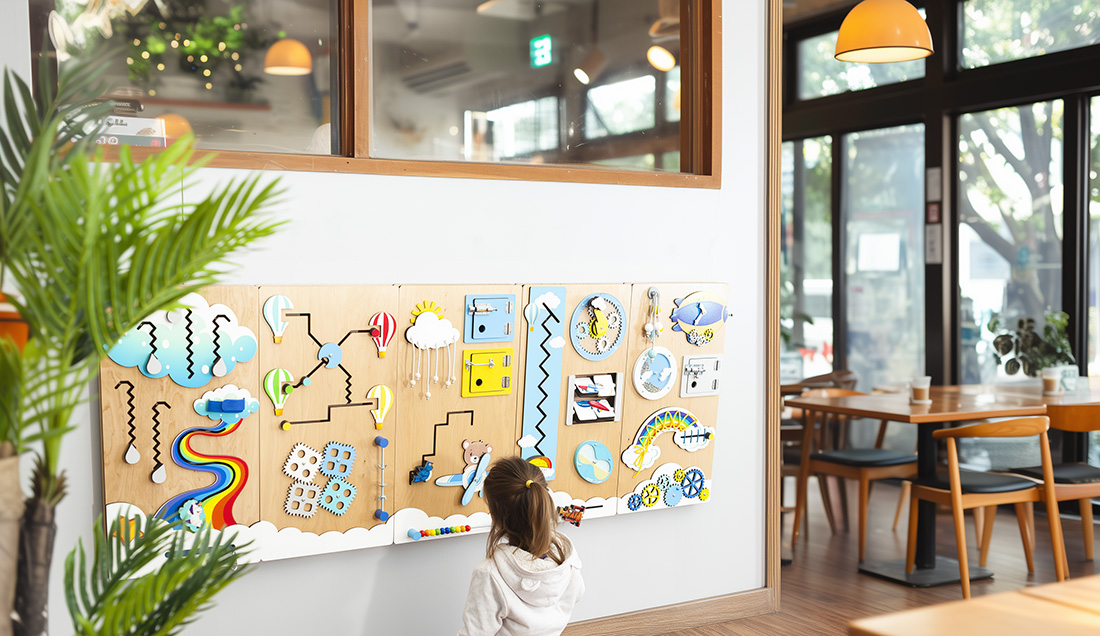
For a deeper look at the tradeoffs, see our wall-mounted vs freestanding busy boards compared.
What age suits this format
Most boards in this format suit children from about 1 to 6 years old. The right choice depends more on mounting height and element size than on a strict age cutoff.
- 12-24 months: mount low, choose boards with large, simple elements - big latches, chunky sliders. Supervise closely around small parts.
- 2-4 years: the core busy board age range. Locks, zippers, gears and spinners match developing fine motor skills well.
- 4-6 years: boards with more elements and finer detail - buckles, laces, multi-step mechanisms - hold attention longer.
- Mixed-age rooms: stack two boards at different heights, or choose a wide board with a range of element sizes across it.
Sizes and how much wall you need
Boards in this format range from a single small panel to a multi-panel wall spanning several meters. A single board suits a bedroom corner or a clinic waiting area. Classrooms and shared daycare rooms typically use 3 or more panels, letting several children use the wall together.
If you're planning a specific wall, our DIY sensory wall builder lets you choose the panel count and works out the layout for your wall width.
Where this format is used
- Home bedrooms and playrooms - transform empty wall space into a permanent activity spot
- Preschool and daycare classrooms - see our sensory wall panels for schools collection for pre-built, classroom-ready options
- Pediatric clinics and waiting rooms - see our guide to sensory walls in dental clinics
- Therapy rooms and sensory spaces - see sensory wall panels for autism
- Libraries and children's areas - a quiet, self-directed activity for waiting or transition time
Materials and installation
- Handcrafted birch plywood, non-toxic water-based finishes
- Locks, latches, gears and switches mechanically fastened, not glued
- Each board ships with mounting hardware and a printed guide
- A single board installs in under 30 minutes on drywall or a solid wall surface
- See our sensory wall safety guide for full material and finish details
Need a custom board for your wall?
We build boards tailored to your space, preferred colors, activity mix and dimensions - for a single bedroom wall or a full classroom installation.
Frequently asked questions
What age is this format best for?
Most boards suit children from about 1 to 6 years old. Younger toddlers do best with boards mounted low, featuring large, simple elements. Older preschoolers get more out of boards with finer, multi-step mechanisms.
How do I mount a busy board to the wall?
Each board ships with mounting hardware and a printed guide. Most boards install with wood screws into drywall studs, or masonry anchors into a solid wall. A single board typically takes under 30 minutes to install.
Is wall mounting better than a tabletop board?
It depends on your space and use case. Wall mounting wins on floor space, stability and letting multiple children play at once - better for classrooms, clinics and dedicated play walls. Tabletop and cube boards win on portability - better for travel or a single child in a small space.
How much wall space do I need?
A single panel fits most bedroom corners or a clinic waiting area. Classrooms and shared daycare rooms typically use 3 or more panels so several children can use the wall together. Our DIY sensory wall builder calculates panel count for a specific wall width.
Can I get a custom board?
Yes. We build boards in custom sizes, colors and activity combinations for homes, schools, clinics and therapy spaces. Contact us with your wall dimensions and requirements.