


Before choosing a theme, a finish or a size, there's a more basic decision. Does the board go on the wall, or does it stand on its own? We make wall-mounted panels, so it would be easy to just tell you wall-mounted wins. It doesn't always. Here's an honest look at both.
What each format actually is
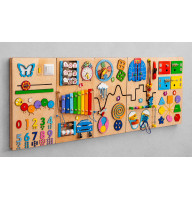
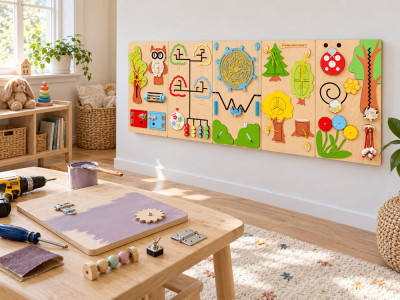
A wall-mounted busy board is fixed permanently to a wall, at a height you choose. It has zero floor footprint and can't be knocked over. A freestanding or tabletop busy board sits on a table, shelf, or the floor. Some get propped or leaned against a wall instead of standing on their own. That's worth a caution. Any board that's leaned rather than fixed in place, including one of our own wall-mounted panels used without mounting it, can be pulled or tipped over onto a child. It's portable, but it takes up space wherever it's set down, and without a stand or secure footing it isn't stable.
One related term worth separating out: an activity table is a standalone piece of furniture with activities built into its own surface, rather than a board placed on top of an existing table. Activity tables are typically bulkier and heavier than a tabletop busy board, and they're bought as furniture in their own right rather than an add-on panel. If furniture footprint matters more than the wall-mounted-vs-portable question this guide focuses on, an activity table is worth comparing separately, closer in spirit to freestanding than wall-mounted.
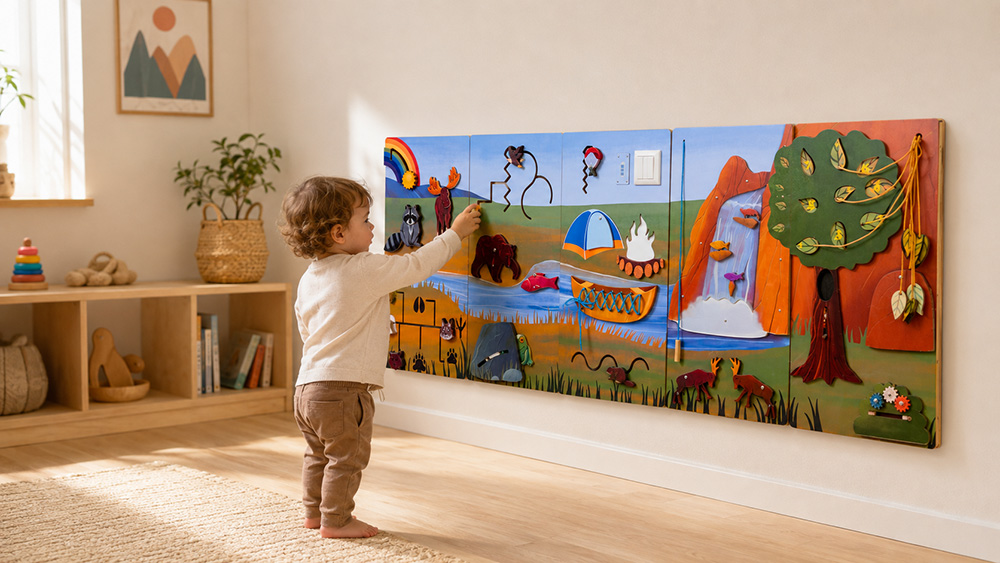
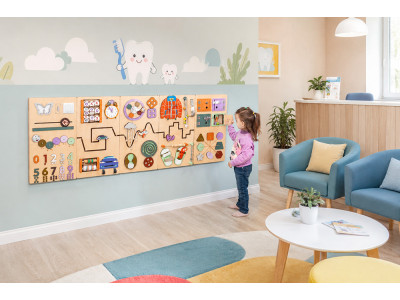
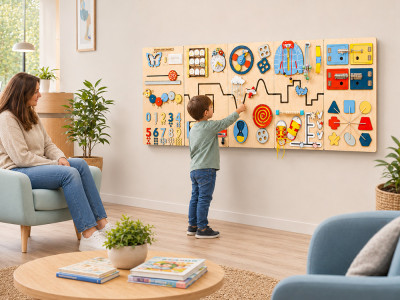
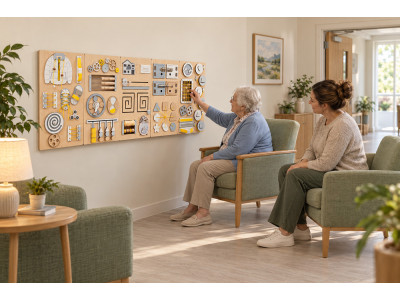
Over the years we've installed wall-mounted busy boards in homes, Montessori classrooms, pediatric clinics, therapy centers, libraries, waiting rooms and daycare facilities. While every environment is different, the reasons customers choose wall-mounted designs are remarkably consistent. They save floor space, allow multiple children to play together, and remain securely in place during everyday use.
Where wall-mounted genuinely wins
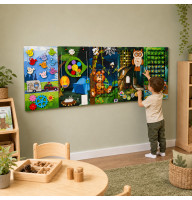
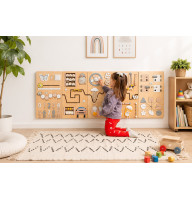
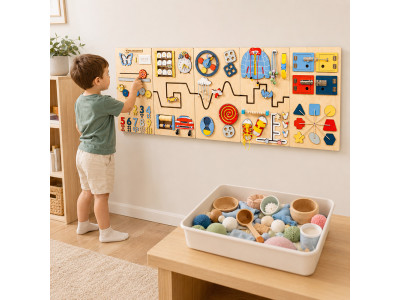
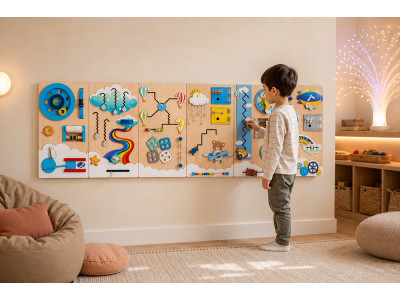
Vertical play surfaces do real work that a flat, tabletop surface doesn't. Pediatric occupational therapists deliberately use vertical surfaces. Reaching and working upward promotes wrist extension, shoulder and elbow stability, and core engagement, all foundations for handwriting. Our guide to vertical surface activities covers the mechanism in more depth. The same logic applies to the larger sensory wall panels some families and clinics choose over a smaller busy board.
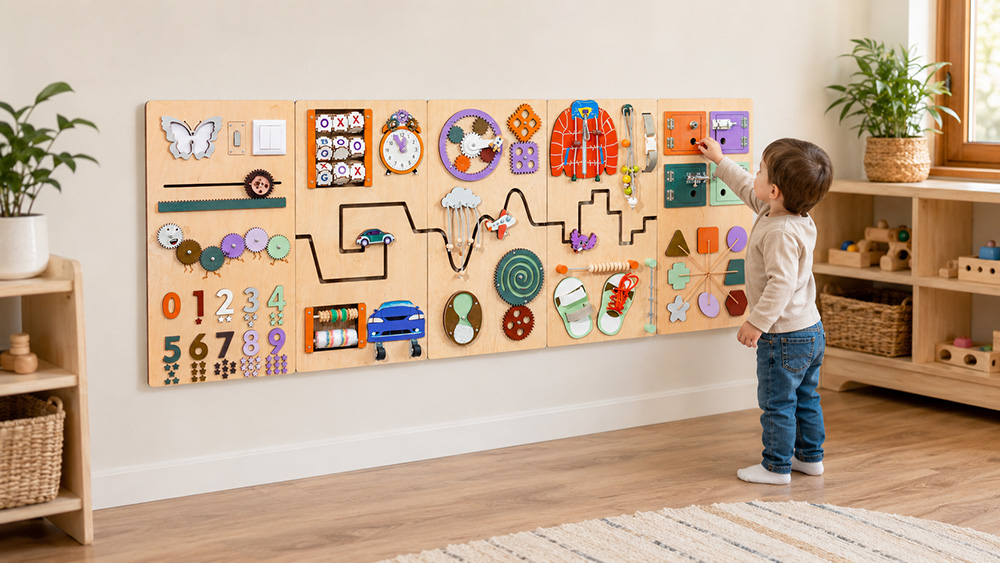
Practically, it also frees up floor space entirely and can't be pulled over onto a child. Several children can use it side by side without one blocking another's access. In shared spaces like a school, a daycare, or a clinic waiting room, that combination is hard to replace with a freestanding piece.
Our panels also close part of the portability gap. They use a mounting bracket an adult can detach without tools or special equipment. A panel can come down for a move, storage, or a trip to a grandparent's house without a drill or a screwdriver. A child can't do the same. The bracket holds firmly enough during normal play that it doesn't come loose the way a leaned or propped board can. It still lets an adult take it down on purpose when needed.
Where freestanding genuinely wins
This is the part a wall-mounted seller doesn't always say out loud, so we will. Freestanding and tabletop boards don't need drilling, a stud finder, or anyone's permission. That matters if you're renting and can't put holes in a wall. It matters just as much if you're moving within a year or two and don't want to leave hardware behind.
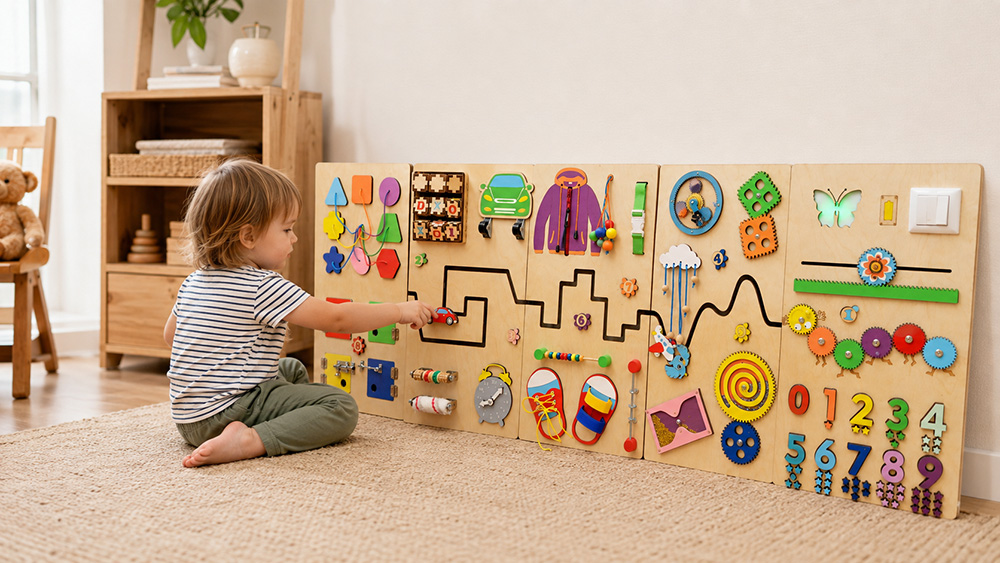
They're also genuinely portable in a way that needs no extra step. A freestanding busy board can move between rooms or go in a car for a long drive without anyone unmounting anything first. For a child who isn't yet standing confidently at a wall, working at floor or table height, seated, is often just easier and safer.
The comparison
The stability advantage above assumes the board is actually mounted to the wall. A panel that's only leaned or propped, wall-mounted or not, carries the same tip-over risk as any freestanding piece.
Which option do occupational therapists usually recommend?
Where this comes up in a clinical setting, occupational therapists tend to favor wall-mounted, vertical work over tabletop activities. Working against a vertical surface asks a child to extend the wrist back rather than let it curl forward. It also engages the shoulder and elbow to hold the arm up against gravity. Both are foundational movements for handwriting. Pediatric OTs use vertical surfaces deliberately to build them, according to guidance from pediatric therapy practices NESCA and Your Therapy Source.
That's clinical practice reasoning built up over years of pediatric OT work, not a randomized trial specifically on busy boards. It's worth being precise about that distinction. The broader link between fine motor control and later academic outcomes does have stronger research behind it. Fine motor ability measured at kindergarten entry predicts later reading, math, and science achievement. In some analyses, it predicts these better than early reading and math scores themselves (Grissmer et al., 2010; Cameron et al., 2012). A wall-mounted board that gets a child reaching, gripping, and working against gravity is a reasonable way to support that skill-building. That's alongside whatever else a family or a therapy plan already has in place. For pediatric therapy activities more broadly, this is one tool among several, not a replacement for a therapist's own program.
Choose wall-mounted if
- You own your space, or can use hardware that won't damage a rental.
- Floor space is tight, or you're outfitting a shared room where several children need access at once.
- You want the vertical-surface developmental benefit, particularly for a school, clinic, or therapy setting.
- The board is staying in one place long-term.
Choose freestanding or tabletop if
- You're renting and can't drill, or you move often.
- You want to move the board between rooms or take it in the car.
- Your child is younger, not yet standing confidently, or plays better seated at floor or table height.
- You want to try a busy board without committing to a permanent installation.
Who typically chooses each option
The pattern below splits fairly cleanly along institutional versus home use. Institutional settings, schools, clinics, daycares, therapy practices, almost always lean wall-mounted, for the floor-space and multi-child reasons covered above. Home use is more evenly split, depending on whether the space is rented or owned.
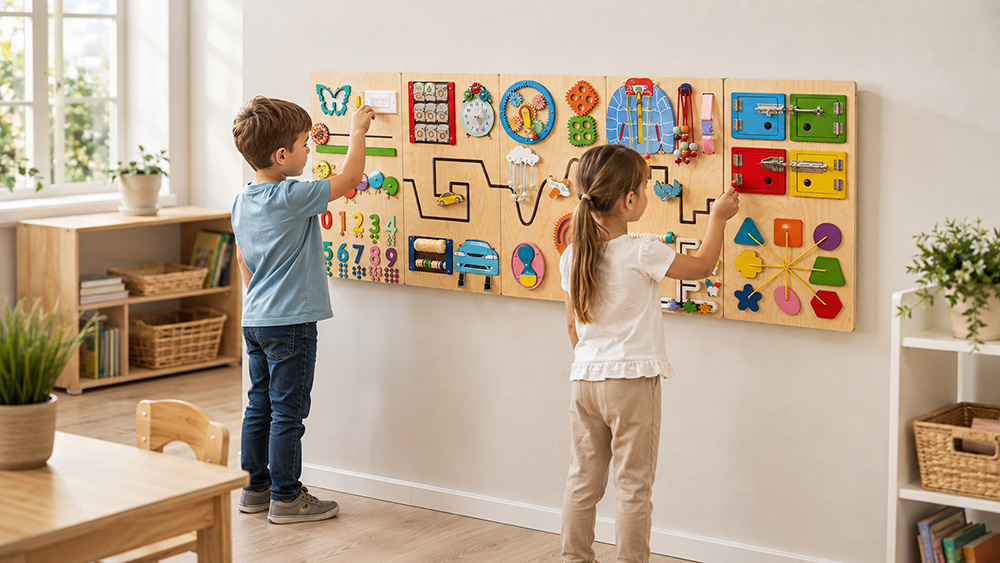
- Families - usually wall-mounted for a permanent playroom feature, or freestanding for a smaller space or a rental.
- Schools - almost always wall-mounted, for floor space and multiple students accessing it at once. See our panels for schools.
- Libraries - wall-mounted, to keep a quiet corner clear underfoot while still giving children something hands-on.
- Pediatric clinics - wall-mounted, for hygiene, durability, and zero floor clutter in a waiting room. See our panels for clinics.
- Occupational therapy - wall-mounted, specifically for the vertical-surface benefit described above. See our vertical surface activities guide.
- Daycares - wall-mounted, for the same floor-space and multi-child reasons as schools. See our panels for daycare.
Freestanding still has its place in each of these, particularly for a single portable piece or a temporary setup. But the pattern above is what we see most often once a space is more than one child's bedroom.
A middle ground worth knowing about
If a rental wall is the only obstacle, a wall-mounted board doesn't have to mean permanent drilling for every size. For lightweight boards, some removable mounting systems may be suitable. They need to be rated for the board's weight and compatible with the wall surface. Larger or heavier panels should always be installed using the recommended mounting hardware. It's still worth checking your lease and confirming the weight rating before you buy anything. Our panel-selection guide covers mounting and weight considerations in more detail. For very young children, mounting a wall-mounted board lower, within easy standing or supported reach, often solves the age concern without giving up the vertical-surface benefit.
We build wall-mounted panels, so that's the format we can speak to in detail and the one we sell. If floor footprint, permanence, or shared multi-child access matter for your space, our wall-mounted busy board collection and the broader busy boards range are the place to start. If a freestanding busy board is genuinely the better fit for your situation, that's a real answer too. It's worth choosing on its own merits rather than defaulting to whatever a seller happens to stock. Weighing a completely different format instead? Our busy board vs. sensory bin comparison covers that decision too.
Leaning toward wall-mounted?
Explore handcrafted wall-mounted busy boardsDesigned for homes, classrooms, pediatric clinics and sensory spaces, sized and finished to fit your wall.
Frequently asked questions
Is a wall-mounted busy board better than a freestanding one?
Neither is universally better. Wall-mounted wins on floor space, stability, multi-child access, and vertical-surface developmental benefits. Freestanding wins on portability and renter-friendliness. The right choice depends on your space and situation, not on which format is inherently superior.
Can I mount a busy board without drilling?
Some removable mounting strips rated for heavier weights can work, depending on the wall surface and the panel's weight. Check your lease and the mount's weight rating before relying on this for a larger panel.
What age is wall-mounted best for?
Wall-mounted works well once a child can stand and reach confidently, typically from around age two to three onward, and a lower mounting height extends that range younger. For infants or children who aren't yet standing, floor or table-height play is usually easier.
Do you sell freestanding or tabletop busy boards?
No, we build wall-mounted panels only. If freestanding is the better fit for your space, this guide should help you evaluate that option on its own merits, even though it's not what we sell.
Do occupational therapists recommend wall-mounted busy boards?
Pediatric occupational therapists commonly favor vertical, wall-mounted work over tabletop activities, since reaching and working against a wall promotes wrist extension and shoulder stability, both foundational for handwriting. This is established clinical practice reasoning rather than a randomized trial on busy boards specifically, and it's one tool among several in a therapy plan, not a replacement for one.
Are wall-mounted busy boards safe for a shared space?
Yes, and it's one of their strongest advantages. Several children can use a wall-mounted board side by side without one blocking another's access, and there's no risk of the board being tipped over the way a freestanding piece can be.


Write a comment