



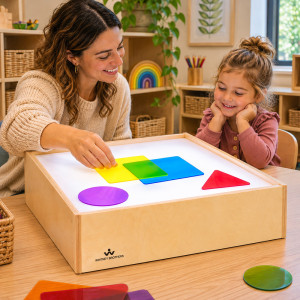
A light table for kids is a low table or box with an evenly lit, translucent top. Children place colored tiles, picture cards or leaves on it. The light from below shows color, shape and texture in a way an ordinary table cannot. Preschools and daycare centers use a light table for kids as a learning center. Families use one in a playroom or a sensory corner at home. Light tables are a familiar part of Reggio Emilia and Montessori-inspired classrooms, where children explore color, transparency and shadow with their hands.
How to Choose a Light Table for Kids
- Table or tabletop box. A freestanding table gives children their own play station. A tabletop light box sits on a table you already have. It takes up no floor space and can be put away after use.
- How many children at once. A standard table suits two or three children working side by side. A large or classroom-size table lets a small group share one surface.
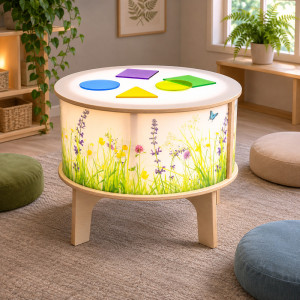
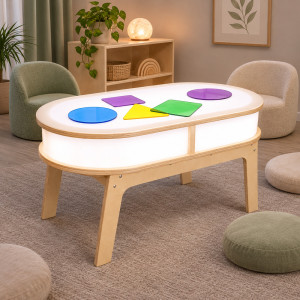
- Lit sides. The two Radiant models also light their side panels, so children sitting on the floor can explore light at eye level.
- Height. Some tables adjust in height, so the same table can serve a toddler group now and older preschoolers later.
- Shape. Rectangular tables fit against a wall or into a learning-center layout. A round table lets children gather on every side.
- Light type. A white light shows the true colors of translucent materials. Color-changing tables add colored modes, which some teachers like for mood and others find distracting. Ask us about the light type of a specific model before you order.
Compare the Models
All sizes below are taken from the manufacturer's specifications, in inches (width x depth x height).
| Model | Format | Size (in) | Best for |
|---|---|---|---|
| Superbright LED Tabletop Light Box | Tabletop box | 24.5 x 24.25 x 6 | Small rooms, homes, shared use across tables |
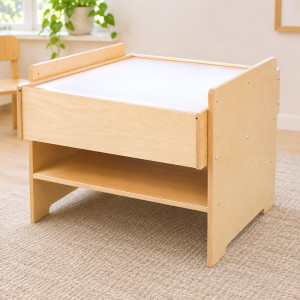
| Superbright LED Light Table | Table, height adjusts from 24 down to 18 | 25.5 x 24.5 x 24 | A first light table for a classroom or playroom |
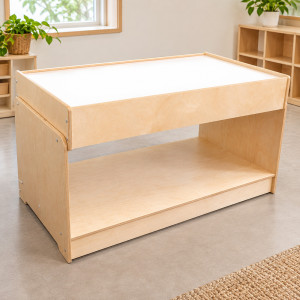
| Superbright LED Large Light Table | Table, adjustable height | 43 x 23 x 24 | Small groups working side by side |
| Whitney Plus Radiant LED Light Table | Table with lit side panels, part of the Whitney Plus collection | 47 x 23.5 x 24 | Classrooms furnished with matching pieces |
| Nature View Radiant LED Light Table | Round table with lit side panels | 29.5 x 29.5 x 24.25 | Play from all sides, a centerpiece for a learning area |
The manufacturer lists all five models for children from about 2.5 to 6 years old.
Accessories and a Quiet Cube with a Light Table
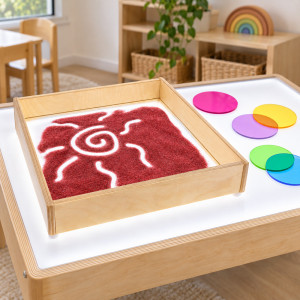
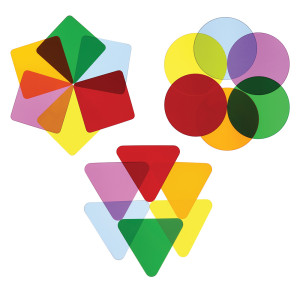
Two Whitney Brothers accessories fit every table above. Color Wheel acrylic light table shapes come in circles, squares and triangles in the six colors of the color wheel, for sorting and color mixing. The Sand Box for Light Tables is a birch frame with a clear bottom that turns any lit top into a sand drawing station.
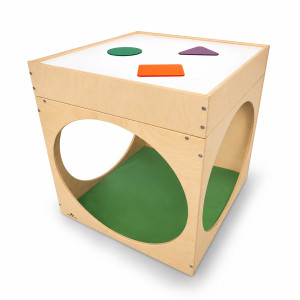
If you need a quiet space as well as light play, the Superbright LED Creative Cube combines both. A child rests inside under a printed forest canopy, while the top works as a 30.5 in high light table.
Where Light Tables Are Used
In a preschool classroom, a light table for kids usually becomes its own learning center or joins an existing one:
- Block and building center. Translucent blocks and magnetic tiles show how light passes through a structure.
- STEM and science center. Children test which objects let light through and how colors mix.
- Early literacy. Tracing letters on paper over a lit surface makes the lines easier to follow.
- Dramatic play. A glowing surface becomes a stage for small figures and translucent props.
Outside the classroom, light tables appear in occupational therapy rooms, libraries and pediatric or dental waiting rooms, where a quiet, screen-free activity helps children wait. In a waiting area a light table pairs well with sensory wall panels for clinics, which use wall space instead of floor space.
Lighting, Power and Safety
These tables use an LED lighting system. For its Superbright models, Whitney Brothers states that the light is brighter and more evenly spread, uses less electricity and produces less heat. Every model is UL Listed in the USA and Canada and GREENGUARD Gold certified for low chemical emissions. That matters for an electrical product used by young children. A light table needs power, so plan its place near an outlet and keep the cord out of walkways.
The wooden models are built from birch plywood with a natural UV finish. For cleaning, the manufacturer recommends a warm, damp cloth and mild soap.
Light Table Toys, Materials and Activities
Light play works with simple materials. Translucent color tiles, magnetic tiles and see-through blocks are good for sorting, building and color mixing. X-ray style picture cards, leaves and shells show detail from inside. A tray of colored sand turns a light table for kids into a finger-drawing surface, and older children can trace pictures on paper. Teachers often rotate a small set of materials each week, so the same table keeps offering something new. Many of these activities double as early science: children notice which objects let light through and which cast a shadow.
A light table rarely works alone. In a classroom it usually sits next to a reading corner, a sensory table or a wall with sensory wall panels. Children can then move between quiet and hands-on activities. In a sensory room, it pairs with wall-mounted light pieces such as the PixelPop Interactive Light Panel. Our guide on what should be in a sensory room walks through planning a space by zones.
Frequently Asked Questions About Light Tables
What age is a light table for kids suitable for?
The manufacturer lists these models for children from about 2.5 to 6 years old. Height-adjustable tables can be lowered for younger children and raised as the group grows.
Should I choose a light table or a tabletop light box?
Choose a table if you want a permanent learning center with its own footprint. Choose a tabletop box if floor space is tight or you want to move it between rooms. It also suits a room that already has a table at the right height.
Why are light tables used in Reggio Emilia and Montessori classrooms?
Both approaches favor open-ended materials that children explore at their own pace. A lit surface turns everyday objects into something to examine closely, so teachers use it for free exploration as well as planned activities.
Do the tables get hot?
For its Superbright models, the manufacturer states that the LED system produces less heat and runs on a low current. As with any electrical product, an adult should set it up, check the cord and switch it off after use.
Is an LED light table better than an older fluorescent one?
In general, LED lighting runs cooler and uses less power than the fluorescent tubes found in older light boxes, and it does not need tube replacements. Every model in this collection uses LED lighting.
What materials should I use on a light table?
Anything that lets light through works best. Try translucent tiles and shapes, color paddles, X-ray picture cards, tracing paper and leaves. A shallow tray keeps sand or water off the lit surface.
What warranty do the light tables have?
The wooden furniture is covered by the manufacturer's lifetime limited warranty. Electrical components and lighting carry their own, separate limited warranty. See our Whitney Brothers page for the warranty terms, or ask us about a specific model.
Can schools order with a purchase order?
Yes. We accept purchase orders, tax-exempt certificates and ACH bank transfers. Lead time and shipping are confirmed with your quote.
Each light table for kids in this collection is part of our wider sensory room equipment collection.
Furnishing a classroom or several rooms?
Request a Quote