


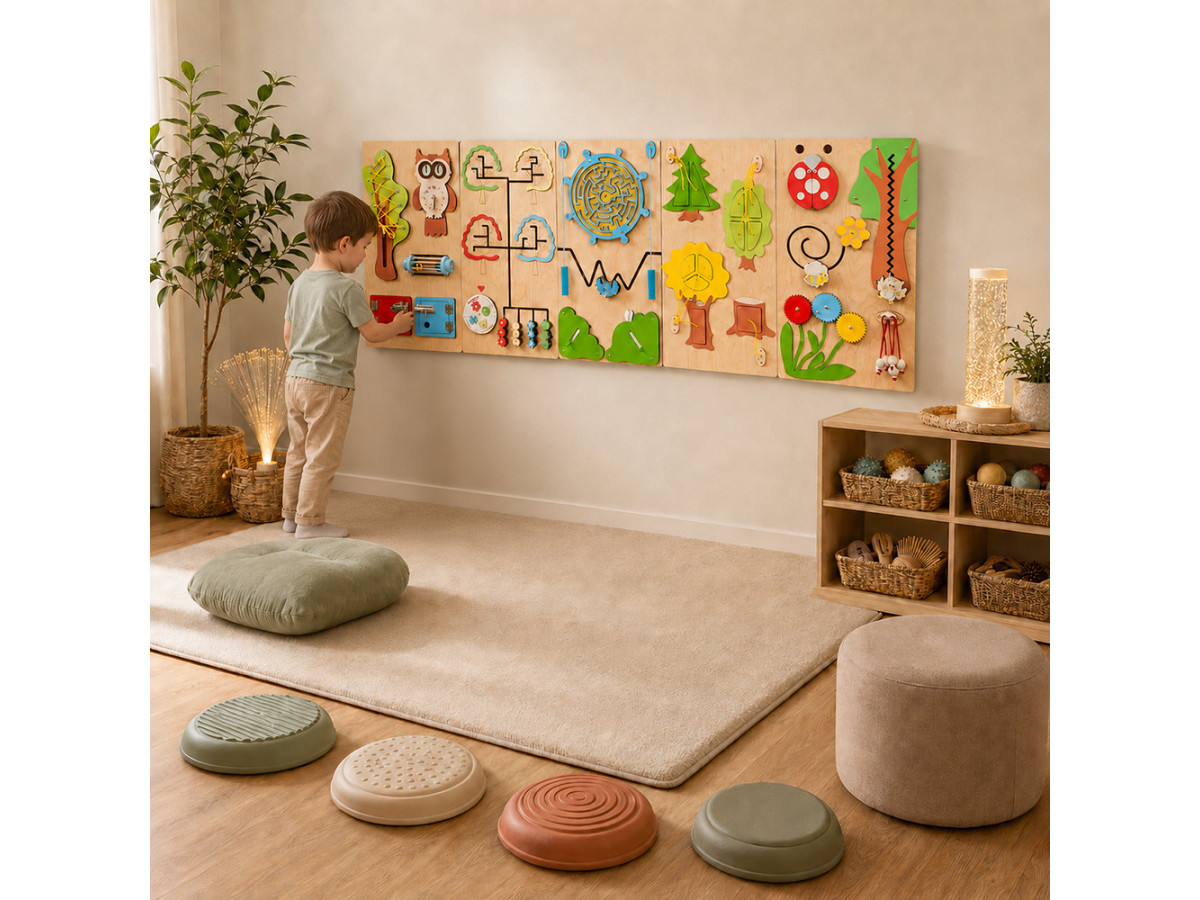
Many children respond strongly to everyday sensory input: loud music, certain textures, new clothing. A sensory room can help. It gives them a space to safely explore and regulate these responses. So what should be in a sensory room? This guide breaks it down category by category, whether you're setting one up at home, in a classroom, or in a shared space like a waiting room.
Planning this for a K-12 or SPED setting specifically? Our guide to building a sensory room in schools covers the institutional side (budgeting, layout and district approval) in more depth than this general checklist.
Why do we need a sensory room?
Every moment our body receives signals: visual images, sounds, smells, and tactile sensations. The brain processes these to guide behavior and physical responses. Children vary widely in how sensitive they are to this input. Some sensory-based approaches used by occupational therapists, sometimes called sensory integration, aim to address this directly. The American Academy of Pediatrics notes that research on how well these approaches work is still limited.[1] A sensory room, in the more everyday sense used here, is simpler than that. It brings together equipment and activities that give children a structured way to engage with these signals.
For a child with typical sensory processing, an itchy sweater or tight tights is a minor annoyance. For a child who's more sensitive to sensory input, the same feeling can be overwhelming and lead to real distress.
Hands-on, exploratory play is broadly recognized as valuable for young children: developing fine motor skills, touching different textures, spending time barefoot outdoors.[2] Urban living makes that harder to come by day to day. That's part of why families and schools create a dedicated sensory room instead.
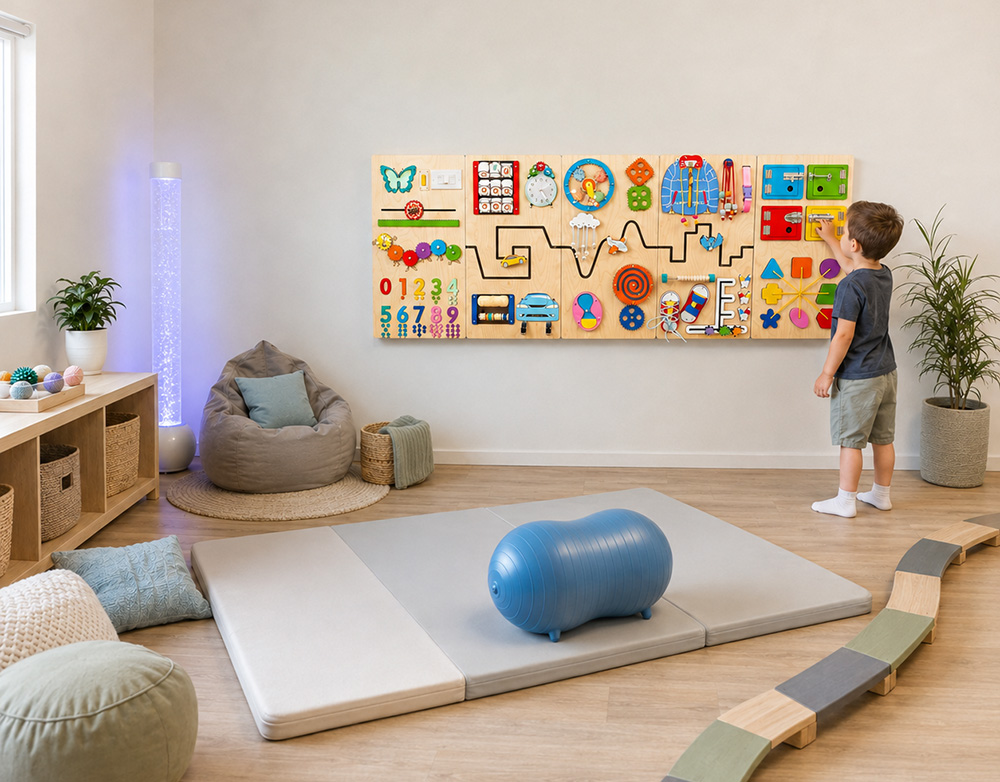
Sensory room must-haves: a category-by-category checklist
Here's what should be in a sensory room, organized by the kind of stimulation each piece provides rather than by brand or product type. Whatever style of room you're building (bright, dark or somewhere in between), the equipment falls into a handful of core categories. Use this as a working checklist. Pull from whichever mix suits your space, budget and goals.
What makes something "interactive/light-based" rather than just visual?
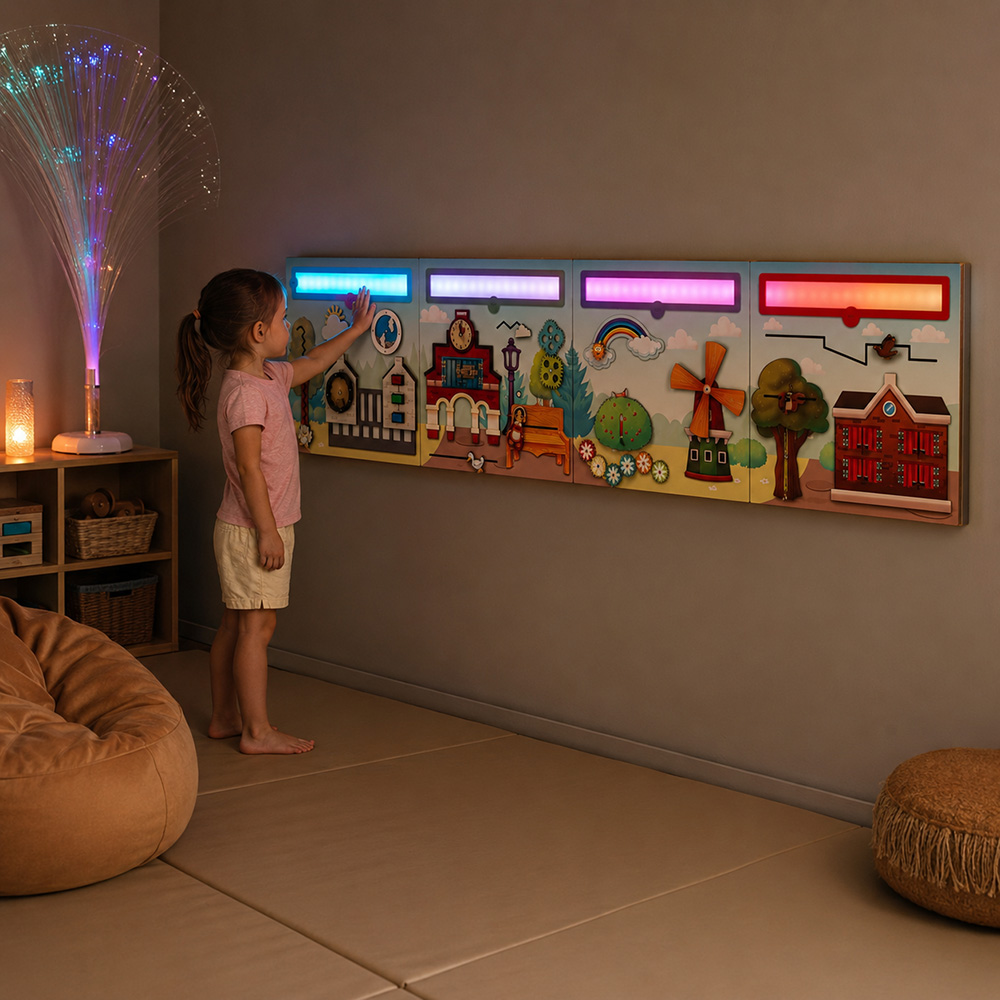
The two categories look similar at a glance. Both involve light. But they work in opposite directions. A purely visual element (a projector, a mirror ball, a lava lamp) is something a child watches. The light changes on its own, and the child's role is to observe. An interactive/light-based element flips that around. The child presses a button, turns a knob or slides a switch, and the light responds right away. That immediate cause-and-effect link, "I did this, and that happened", is the part a purely passive light source can't offer on its own.
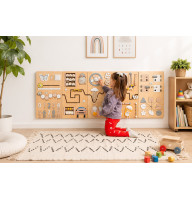
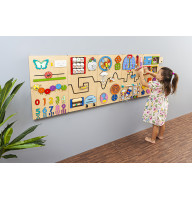
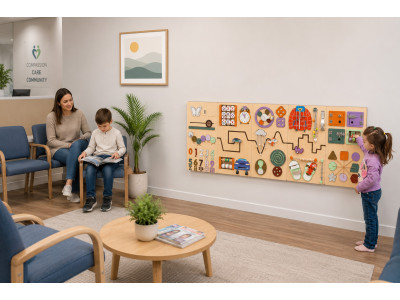
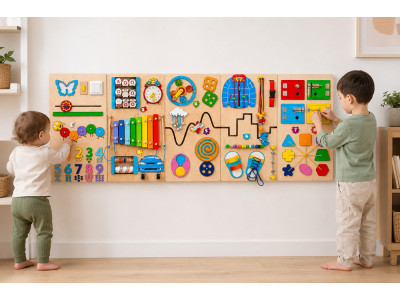
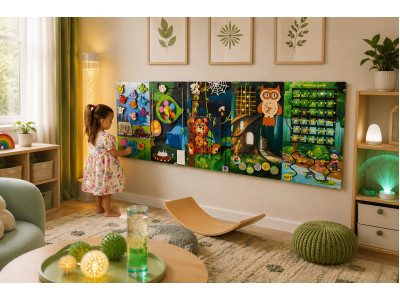
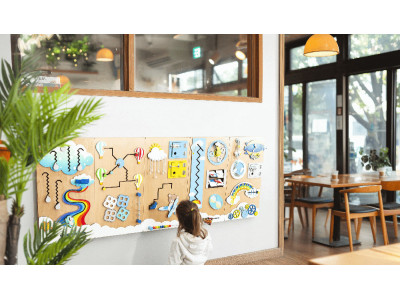
Which one fits better depends on what the room is for. A passive visual element suits a lower-arousal, calming corner. The goal there is to reduce stimulation and help a child wind down. A dim room with a slow-moving projector asks nothing of the child watching it. An interactive/light-based element suits a space built for active engagement instead: a classroom station or a waiting area, where the goal is to hold attention and give the child something purposeful to do with their hands. Our interactive wall decor collection is built around this response. Press a button and the matching light glows, so the feedback is immediate rather than ambient.
Most rooms end up using both. Passive visual elements work well for the calmer zones. Interactive/light-based elements work well for the zones meant to hold a child's attention and give them something to actively do.
Other elements you might add
Beyond the three core modalities above, many sensory rooms also include a few supporting categories. What fits depends on the space and who's using it:
- Soft furnishings: bean bags, floor cushions and soft modular play shapes for comfort and safe floor-level play.
- Movement and vestibular equipment: balancing discs, balance boards and swings. Choose these with input from a qualified therapist or clinician for anyone with specific musculoskeletal needs.
- Sound and scent: calming audio or gentle scent diffusion, used in some rooms to round out the mix. Not every setting needs or uses these.
Bright, dark or play: matching the mix to your goal
The categories above combine differently depending on the kind of room you're building. A bright room leans on daylight, mirrors and bold tactile elements, and works well for active, engaged play. A dark room leans on the visual category from the table above (diffused light, fiber-optic strands, mirror balls) paired with neutral tones and calming scents. A wall-mounted fixture such as our fiber optic jellyfish light is one way to add strands a child can reach into and watch. It's generally intended to help a child unwind. If you'd rather source a dark, calming room as one order instead of piece by piece, the Calming Sensory Room Package combines a bubble tube, fiber optics, a projector and a mirror ball in a single set. Our sensory wall panels for autism are one commonly used tactile option for this kind of room. A combined play-and-adventure room mixes elements from all three modalities instead, so a child can move between calmer and more active activities in the same space. For a full walkthrough of laying out zones within a room, see our sensory room design ideas.
These rooms are used in various kindergartens, including as a lower-stimulation option for children who tend toward heightened stress responses.
Sensory room for adults
Sensory rooms aren't only for children. Some workplaces, therapeutic institutions and maternity wards also set aside a dedicated sensory space. They use many of the same equipment categories, in a calmer, more muted configuration for adult use. If you're weighing whether a dedicated room makes sense for your setting at all, our guide on who needs a sensory room covers that question directly.
Many of the same guidelines used for children's sensory rooms apply to a room for adults. If the room is located in an educational or care setting, a teacher or specialist typically draws up the activity plan. Unlike a regular relaxation room, a sensory room is usually not a place for passive rest. The person uses the equipment through specific activities.
A few practical rules of conduct keep a shared sensory room working well. Remove shoes when entering. Don't bring anyone showing symptoms of illness into the room. Keep food, drinks and outside items out. Make sure multiple children using the room don't disturb each other's activities.
From planning to choosing equipment
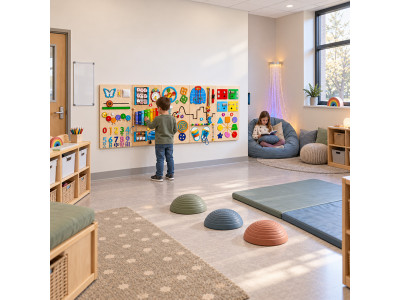
Once you know which modalities your room needs, wall-mounted options are a practical way to add several activities without taking up floor space. The tactile and interactive/light-based rows in the checklist above are usually the easiest to start with for that reason. If you already know you want a wall-mounted panel but aren't sure how many or what size, our guide to choosing sensory wall panels walks through sizing and layout so you don't have to guess. For a light feature that also saves floor space, an LED bubble wall gives the look of a bubble tube in a flat, wall-mounted profile. For the full range of tactile, light and water equipment referenced throughout this checklist, browse our sensory room equipment category.
Frequently asked questions
What should be included in a sensory room?
A well-rounded sensory room usually combines a few categories: visual/optical elements like lights and mirrors, tactile equipment such as sensory panels and busy boards, and interactive/light-based elements that respond to touch. Which categories matter most depends on whether the room is meant to calm a child down or actively engage them.
What's the difference between visual and interactive/light-based equipment?
Visual equipment is something a child watches: the light or image changes on its own. Interactive/light-based equipment responds directly to what the child does. Pressing a button or turning a knob triggers an immediate visual change. Visual elements suit calming, lower-arousal spaces. Interactive/light-based elements suit spaces built for active engagement.
What are the sensory room must-haves for a small space?
For a small space, wall-mounted activities are the most space-efficient starting point. Pair them with one or two soft furnishings and adjustable lighting. You can add more equipment types as space and budget allow.
Do adults use sensory rooms too?
Yes. Sensory rooms are also used with adults, particularly in workplaces, therapy settings and maternity wards. They use many of the same equipment categories, in a calmer, more muted configuration.
Related reading
Sources and further reading
- Zimmer M, Desch L; American Academy of Pediatrics Council on Children with Disabilities. Sensory Integration Therapies for Children With Developmental and Behavioral Disorders. Pediatrics, 2012.
- Yogman M, et al.; American Academy of Pediatrics. The Power of Play: A Pediatric Role in Enhancing Development in Young Children. Pediatrics, 2018.
Educational guide from the BumbleBeeSmart blog. This article describes general sensory room concepts and equipment categories. It is not medical advice and does not replace guidance from a qualified occupational therapist or other healthcare professional.






Write a comment