


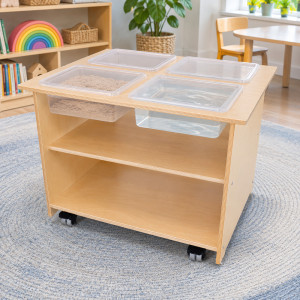

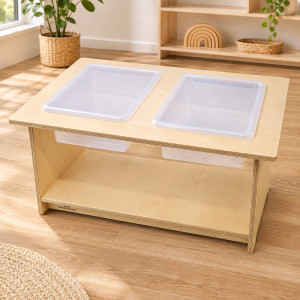
A sensory table is a child-height table with built-in trays or bins that hold loose materials such as sand, water, rice or pasta. Children dig, pour, scoop and sort with their hands, and the trays keep the mess in one place. Daycare centers, preschools and early learning programs use one as a permanent learning center, and families use one for messy play that stays contained at home.
The tables in this collection are made by Whitney Brothers in the US from birch plywood, with clear removable trays and lids. They differ mainly in height, size and number of trays, so the guide below starts with the questions that decide which one fits your room.
How to Choose a Sensory Table
- Age and height. Toddlers need a low table so they can look down into the trays. Preschoolers need a taller one so they are not bending over. Check the table height against the children who will use it.
- Number of trays. Two trays let one or two children compare two materials, and separate trays keep wet and dry play apart. Four trays let a small group play at once, each with a material of their own.
- Lids. Lids keep materials clean between sessions and turn the table into a flat work surface when the trays are closed.
- Mobility. Lockable casters let you roll a table to the sink for filling, outdoors for messy days or out of the way after play.
- Storage. A shelf underneath keeps scoops, cups and spare bins at the table, which makes set-up and clean-up faster.
- Wood or plastic. A wooden sensory table lasts for years of daily use and looks like classroom furniture rather than a toy. Plastic tables are lighter and cheaper, and they often suit outdoor use better.
Types of Sensory Tables
- Sand and water tables. Deep trays that hold water or play sand, the classic choice for preschool classrooms. Both models here take water and sand.
- Sensory bin tables. Several smaller bins instead of one large tub, so a group can work with different materials at the same time.
- Light-up tables. A lit surface for light play with translucent shapes or a tray of colored sand. See our light tables for kids.
- Outdoor tables. Usually plastic or weatherproof wood. The birch tables in this collection are made for indoor use, though the mobile model can roll outside for a session on a dry day.
Compare the Models
All sizes below are taken from the manufacturer's specifications, in inches (width x depth x height).
| Model | Trays | Size (in) | Age | Best for |
|---|---|---|---|---|
| Toddler Sensory Table | 2 trays with lids, open shelf | 29.5 x 18.5 x 14 | 1 to 3 years | Infant and toddler rooms, homes |
| Mobile Sensory Table with Trays and Lids | 4 trays with lids, 2 shelves, lockable casters | 33 x 27 x 24.5 | 3 to 8 years | Preschool and kindergarten classrooms |
Every tray in both models measures 10.5 x 13 in and is 5 in deep, so trays and materials can be shared between the two tables. Both tables are GREENGUARD Gold certified for low chemical emissions.
Sensory Table Ideas and Fillers
The best sensory table fillers are cheap, easy to clean and safe for the age of the group. A good rule is to offer one material per tray and add two or three tools, rather than filling every tray with toys.
Sensory table for toddlers: fillers for 1 to 3 years
- Water with cups, funnels and floating toys
- Play sand with large scoops and buckets
- Large dry pasta shapes or cooked, cooled noodles
- Shredded paper with chunky animals hidden inside
- Large pom-poms and soft fabric scraps to sort by color
Fillers for preschoolers (3 to 5 years)
- Colored rice or dried beans with spoons, tongs and small containers
- Kinetic or moist sand with molds and shape cutters
- Water with droppers, sponges and sink-or-float objects
- Natural loose parts such as pinecones, shells and smooth stones
- Letter or number tiles buried in sand for a dig-and-find game
Many teachers tie the fillers to a classroom theme and change one tray each week while keeping the other as a familiar favorite. Two trays side by side also invite comparison: wet sand next to dry sand, or warm water next to cool.
Keeping the Mess Under Control
Mess is the most common worry about sensory play, and most of it can be planned for:
- Keep wet and dry materials in different trays, so sand does not turn into mud by accident.
- Fill water trays only halfway. Splashing drops a lot when the water level is low.
- Put a washable mat or an old fitted sheet under the table to catch spilled sand, rice and pasta.
- Store a small dustpan and a towel on the bottom shelf, so children can help clean up.
- Close the lids at the end of the session. Dry fillers can stay in the trays for days.
These tables have no drain valve. Instead, each tray lifts out, so you can carry it to a sink to empty and rinse.
Where Sensory Tables Are Used
- Daycare centers and Early Head Start. A low table in the infant and toddler room.
- Preschool and pre-K classrooms. A permanent sensory center, often next to the science or block area.
- Kindergarten and early elementary. Measuring, sorting and early science with water and sand.
- Montessori programs. Pouring, scooping and transferring work with materials stored on the shelf below.
- Therapy and early intervention rooms. A compact station for one-to-one sensory play.
- Homes. Messy play that stays in the trays, with lids to close it up afterward.
This kind of table works well alongside wall play. A wall of sensory wall panels gives children a standing activity with locks, gears and textures, while the table holds loose materials. Our comparison of a busy board vs a sensory bin explains how the two kinds of play differ.
Safety and Care
Match every material to the youngest child at the table. For children under 3, avoid small items that fit through a toilet paper tube, dried beans and other choking hazards. Never use water beads with young children. An adult should stay with the group during sensory play.
Empty water trays at the end of each session. Lift the trays out and wash them with warm soapy water, then dry them before putting them back. Wipe the wooden table with a soft cloth and a little mild dish detergent and dry it right away. Lock the casters on a mobile table while children play.
Frequently Asked Questions About Sensory Tables
What is a sensory table for?
It is a child-height table with built-in trays or bins for loose materials such as sand, water or rice. It gives children a set place to pour, scoop, dig and sort with their hands and simple tools, while the trays keep the mess contained.
What age is a sensory table for?
Tables are made for different ages. The Toddler Sensory Table is listed for 1 to 3 years, and the Mobile Sensory Table for 3 to 8 years. The main difference is height.
What is the best sensory table?
The best one is the one sized for your children. For toddlers, look for a low table with two trays and lids. For a preschool group, look for four trays, a taller frame and lockable casters. In both cases, removable trays and a shelf for tools make daily use much easier.
Are the tables height adjustable?
No. Each model has a fixed height chosen for its age group: 14 in for toddlers and 24.5 in for preschoolers. Pick the model that matches the children who will use it most.
What do you put in a sensory table?
Popular fillers are water, sand, rice, pasta, shredded paper and natural loose parts, with cups, scoops and funnels. Choose materials that are safe for the youngest child in the group.
Can I use water in the trays?
Yes. The trays are plastic and hold water as well as dry materials. Empty them after each session and wipe up any water on the wooden table.
Should I build a DIY sensory table instead?
A DIY table with storage bins can work well at home for a while. For a classroom or daycare, a ready-made table is usually the better choice: it is built for daily use, has rounded edges and lidded trays that fit exactly, and these models are GREENGUARD Gold certified.
What warranty do these tables have?
The wooden furniture is covered by the manufacturer's lifetime limited warranty. Trays and casters carry their own, separate limited warranty. See our Whitney Brothers page for the warranty terms, or ask us about a specific model.
Can schools order with a purchase order?
Yes. We accept purchase orders, tax-exempt certificates and ACH bank transfers. Lead time and shipping are confirmed with your quote.
Every table in this collection is part of our wider sensory room equipment collection.
Furnishing a toddler room or several classrooms?
Request a Quote