


Walk into a busy pediatric practice on a Tuesday morning and the waiting room tells you everything: a toddler dreading a vaccination, an older sibling bored after twenty minutes, a parent juggling both while trying to hear their name called. None of that is a design failure exactly - it's just what a pediatric waiting room is. A sensory wall doesn't fix a busy schedule. It gives that time somewhere useful to go.
This guide is written for pediatricians, practice managers and family medicine offices weighing whether a sensory wall belongs in their waiting room. We'll cover where, what to look for, and how it fits around the parts of a pediatric visit that actually cause anxiety, like vaccinations. We'll point to specific BumbleBeeSmart products and guides only where they're genuinely the right fit.
Why pediatric practices install a sensory wall
Three reasons come up again and again from the practices we work with.
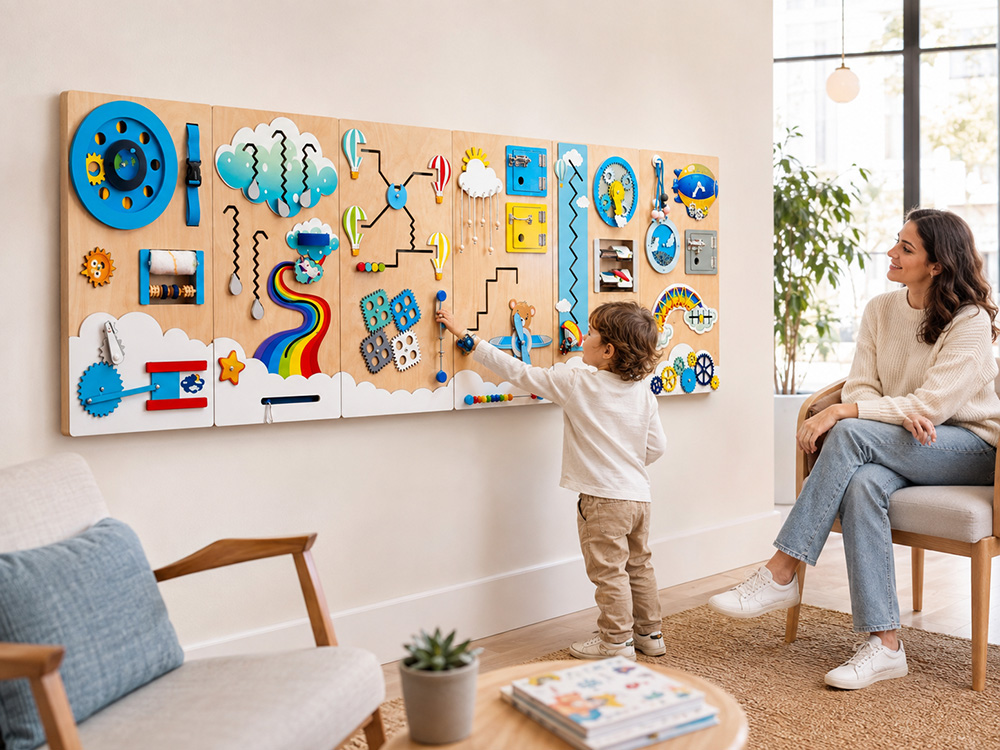
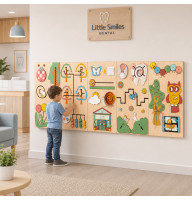
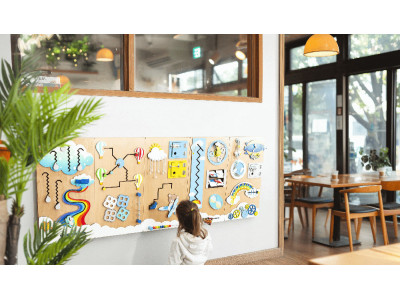
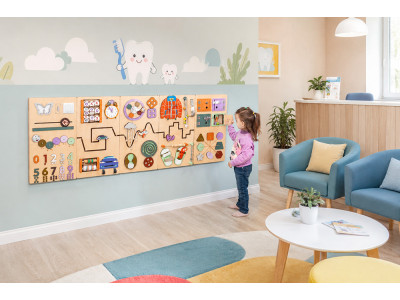
It gives restless waiting a job to do. Pediatric visits often run long - vitals, a wait for the provider, sometimes a wait for a nurse afterward for a vaccine. A wall-mounted panel gives a child something consistent to do with their hands through all of it. No parent has to manage a bag of toys.
It helps before the parts kids actually dread. Well-child visits are routine for parents but not always for kids, especially once a vaccination is on the schedule. A calm, hands-on focal point in the minutes before gives an anxious child somewhere else to focus. It doesn't have to be the exam room door.
It holds up to real pediatric traffic. A family practice or pediatric office sees a high volume of children every day, most of them under ten. Fixed, wall-mounted play survives that volume in a way a toy bin doesn't.
What the research says about waiting rooms and procedural anxiety
A pediatric visit has two different anxious moments: the wait itself, and the procedure that sometimes follows it. Two separate bodies of research speak to each one.
The waiting room environment. A 2021 evidence-based design study of pediatric hospital waiting spaces found that children waiting to be seen are particularly prone to boredom, low mood and anxiety. This measurably affects how families rate the overall visit.1 The environment itself is part of what a family experiences as "the doctor" - not just the appointment.
Hands-on tactile engagement during procedures. Separately, a meta-analysis in the journal Vaccine looked at tactile and vibratory stimulation during needle-related procedures in children. It found this significantly reduced both pain and anxiety scores compared with no intervention. It also outperformed passive distraction cards on several measures.2 A separate randomized trial of clinician-led tactile stimulation around the injection site found a similar pain-reducing effect during infant vaccination.3 A 2025 randomized trial comparing distraction tools during venipuncture found that a hand-manipulated rotating toy reduced pain and anxiety scores against standard care.4
A fair expectation. These studies tested specific tools used at the moment of a procedure, and a waiting-room environment study - not a wall panel sold on its own. Read them as support for two related ideas: hands-on tactile engagement around needle procedures, and a calmer waiting environment shaping how a visit feels. Neither is a claim about the panel itself.
What a good sensory wall for a pediatric practice includes
The features that matter are consistent whether you call it a sensory wall or a busy board, and whether the panel is going in a waiting room or an exam room. BumbleBeeSmart's guide on how to choose panels that engage without overwhelming is a good starting checklist. For a pediatric setting specifically, prioritize:
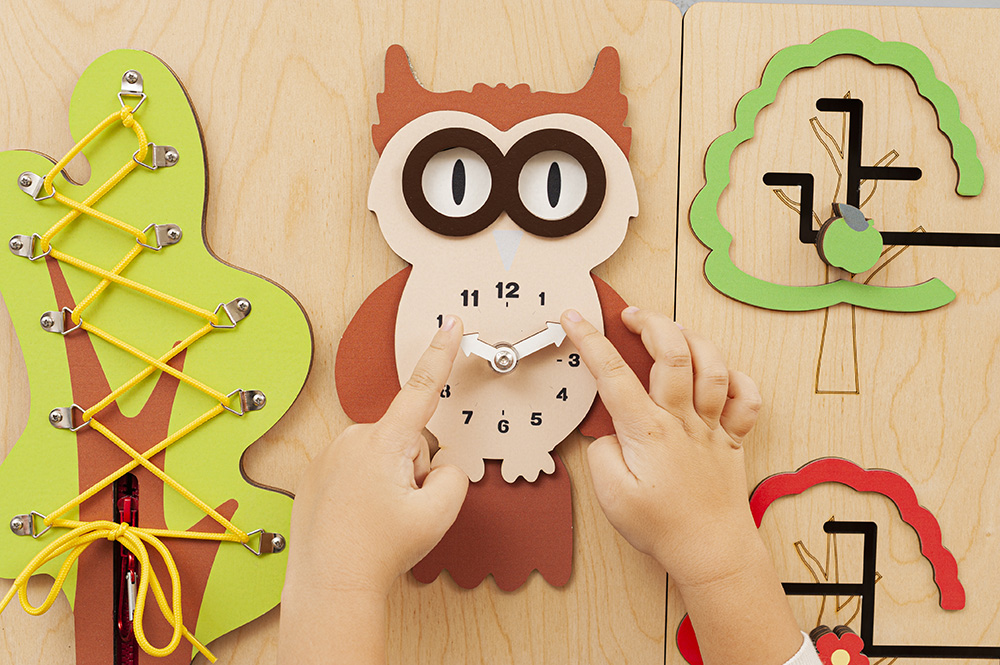
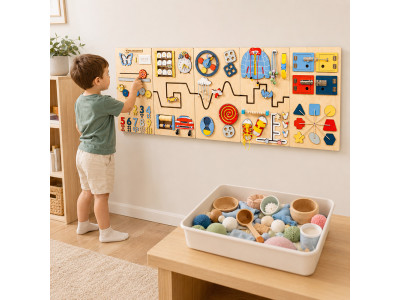
- Hands-on, not just visual. The research above points to tactile engagement, not passive viewing - gears, latches, sliders and textures that a child actually manipulates, which is also what supports fine motor development over repeated visits.
- A calm baseline. Bright and busy works for some practices, but a wall that's the calmest thing in the room does more for an anxious child than one competing with the rest of the decor.
- Durable, sealed construction. Pediatric offices see enormous daily turnover of small hands. Elements should be mechanically fastened, not glued.
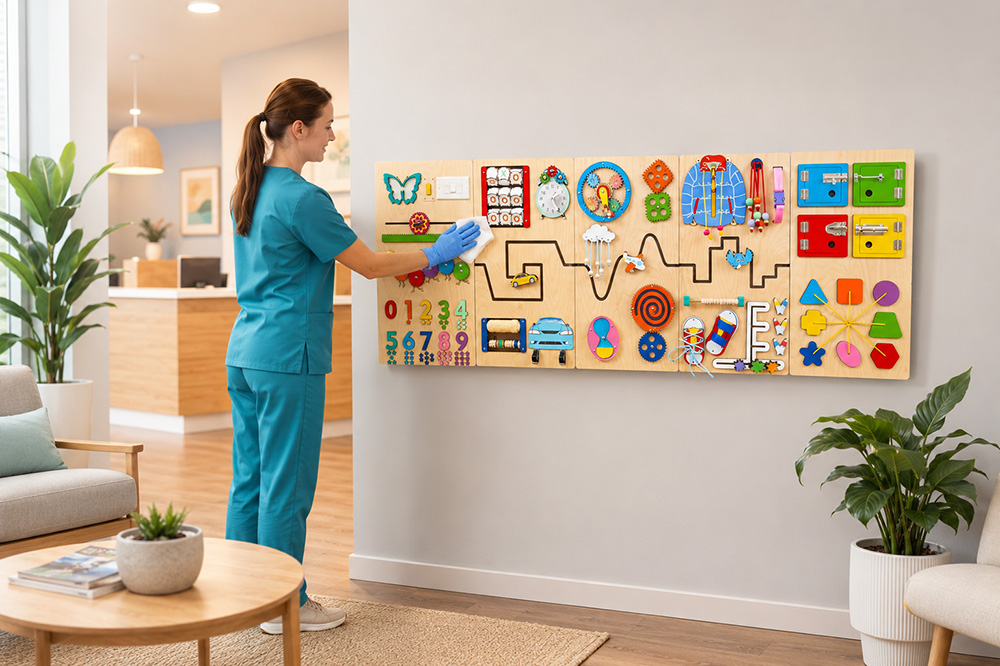
- Easy to wipe down. Between patients, during flu season, and everywhere in between.
Why pediatric offices choose wall-mounted panels over loose toys
A toy bin in a pediatric waiting room has the same three problems it has anywhere else in healthcare. Pieces go missing. Everything needs sanitizing between patients. And it eats floor space that's often already tight around car seats and strollers. A wall-mounted panel solves all three at once.
Outfitting a pediatric or family practice?
Browse panels sized and built for clinical waiting rooms. Wall-mounted, wipe-clean, and calm enough not to compete with the rest of your reception.
Vaccination days and the exam room, not just the waiting room
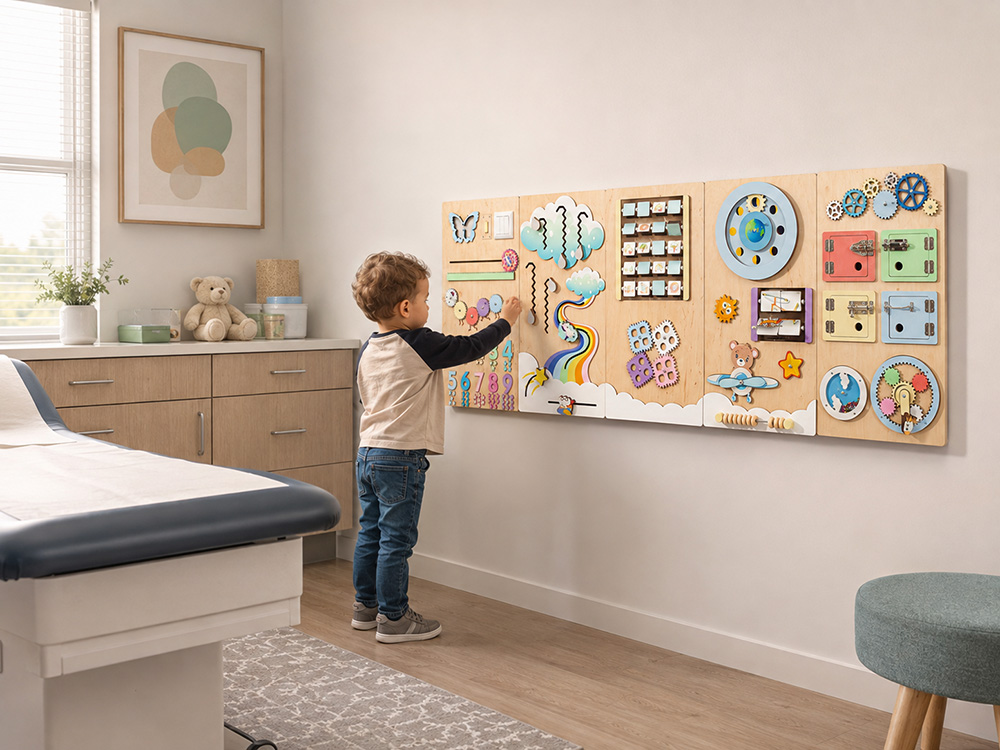
Most of what makes a pediatric visit stressful for a young child isn't the waiting room at all. It's what happens after the name is called. A panel in the waiting area helps with the anticipation. Some practices also mount a smaller panel in the exam room itself, within reach of the exam table. That gives a child something to hold attention on during vitals and, for the moments that call for it, during or right after a vaccination. This mirrors the tactile-engagement research above more directly than a waiting-room panel alone.
Well-child visits vs. sick visits
The two most common visit types put different demands on a waiting area. A well-child visit is scheduled and usually calmer, but often involves a longer wait alongside other well children. That's a good fit for a larger panel that supports parallel play. A sick visit is shorter, and the child is often not at their best. The priority shifts to a low-effort activity that doesn't require much stamina. Many practices find one well-placed panel serves both. Only the expectation for how long a child will use it changes, not the activity itself.
Choosing the right sensory wall for your practice
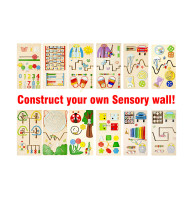
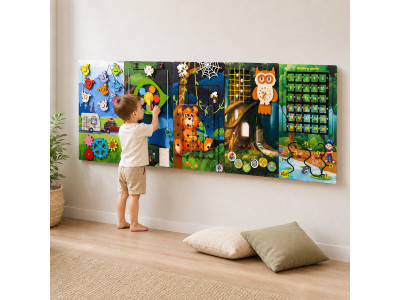
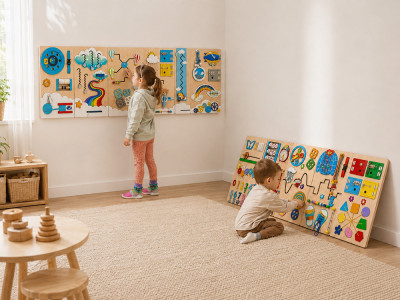
Start with your actual wall and your actual patient mix. Measure the space in the main waiting room. Decide whether a second, smaller panel in an exam room makes sense for your practice. Match intensity to your youngest and most anxious patients rather than the average child. BumbleBeeSmart's panel-selection guide covers the practical must-haves - non-toxic materials, secure mounting, sturdy build - in more depth. Panels are modular, so a configuration can be sized to an odd-shaped waiting room rather than forcing a fixed product into the wrong space.
Before you choose a panel
A short checklist before you request a quote or measure anything twice:
- Wall measurements. Width and height of the space you're considering, in both the waiting room and any exam room.
- Peak patient volume. How many children are typically in reception at once during your busiest hour, not your average hour.
- Exam-room use. Whether you want a second, smaller panel for vitals and vaccination visits, or waiting-room only.
- Cleaning access. Confirm the mounting height and surrounding space allow staff to wipe the full panel without moving furniture.
- Supervision. Whether the panel will be within staff sightline or in a lower-traffic corner that needs a calmer, simpler design.
- Needs of your youngest patients. Infants and very young toddlers need larger, simpler elements mounted lower than a panel built for school-age children.
For larger multi-panel installations across several rooms, see the full sensory wall panels collection. For more on placement in shared reception areas generally, BumbleBeeSmart's guide to decorating waiting-room walls with activity boards is a practical starting point.
Common planning mistakes
- Mounting too high. A panel above easy reach for your youngest patients doesn't get used.
- Poor visibility from reception. Staff should be able to glance over without leaving the desk.
- Overstimulating colors. A wall competing with the rest of a busy decor scheme adds noise instead of calm.
- Blocked stroller circulation. Measure clearance with strollers and car seats in the room, not an empty one.
- No wheelchair access. Confirm mounting height and approach work for seated or wheelchair-using caregivers and patients.
- Difficult cleaning access. If staff can't reach the whole surface easily, it won't get wiped down as often as it should.
Frequently overlooked when planning a pediatric waiting room
- Reception visibility - can the front desk see the panel without extra effort?
- Distance from seating - is it actually reachable from where families sit and wait?
- Stroller parking - does the panel's location interfere with where strollers get left?
- Queue flow - does the panel sit clear of the path to the check-in desk?
- Supervision - is the spot low-risk enough for a parent to glance away for a moment?
- Access for cleaning - can staff reach it fully during a normal cleaning pass, not just a deep clean?
Maintenance, cleaning and installation
Low maintenance matters more in a pediatric office than almost anywhere else on this list. Flu season and the sheer number of hands touching the same surface make that even more true. Panels wipe clean with a damp cloth. The fixed design means there's nothing loose to collect and sanitize separately between patients. BumbleBeeSmart's installation and care manual covers mounting height by age group and routine checks of moving parts. A separate safety and childproofing guide covers materials and secure fixing in more detail.
Custom panels for your practice's brand
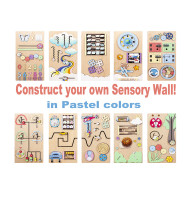
Practices that want the wall to match their interior or reinforce a practice identity can order custom sensory wall panels in branded colors. Options include size, color, logo and activity mix. Multi-provider practices often request this to keep a consistent look across several waiting or exam rooms. Every panel is handcrafted from birch plywood with child-safe, water-based finishes.
Who else this fits
A general pediatric or family practice is the clearest fit. The same wall-mounted, wipe-clean logic applies to several nearby settings:
- Pediatric and family medicine practices, well-child and sick-visit rooms alike
- Urgent care clinics that see a high volume of children
- Pediatric specialty offices - allergy, dermatology, ENT - with longer average waits
- Dental practices, where a related set of research applies specifically to dental anxiety
- Any reception where children wait and floor space is limited
Frequently asked questions about sensory walls for pediatric practices
Does a sensory wall actually help on vaccination days?
Research on tactile stimulation and hand-manipulated distraction tools during needle procedures has shown reductions in measured pain and anxiety scores compared with no intervention. A sensory wall isn't a medical device and doesn't replace clinical pain-management protocols. It applies the same hands-on principle in the moments before and after a vaccination.
Should the panel go in the waiting room or the exam room?
Many practices use both. A larger panel in the main waiting room helps with general anticipation and boredom. A smaller panel in the exam room, within reach of the exam table, helps in the moments right around a procedure.
How many panels does a pediatric waiting room need?
It depends on typical patient volume. A smaller family practice often does well with 2-3 panels. Busier pediatric offices with more simultaneous families in reception tend to use a wider set so more than one child can use it at once. Send us your space and we'll recommend a layout.
Are these panels sanitary enough for a pediatric office during flu season?
Panels are built to wipe down with standard clinical disinfectant between patients. Everything is fixed to the wall, so there are no loose parts to collect and sanitize separately, unlike a toy bin.
Can we get a custom panel for a multi-location pediatric group?
Yes. We build matching or branded panels for practices ordering across several locations. Contact us with your locations and preferred colors for a quote.
The bottom line
A sensory wall won't shorten a wait or replace good clinical care. But it does one thing well: it gives restless, sometimes anxious waiting time somewhere useful to go. It applies a hands-on principle that the procedural-anxiety research consistently supports. For a practice weighing whether it's worth the wall space, the most useful next step is measuring the room and looking at configurations against it.
Send us your wall dimensions and your estimated peak patient volume, and we'll come back with a panel count and layout recommendation suited to your practice.
Browse sensory wall panels for clinics Request a practice quote
Research referenced
- 1. Qi, Yan, Lau & Tao. Evidence-based design for waiting space environment of pediatric clinics: three hospitals in Shenzhen as case studies. International Journal of Environmental Research and Public Health, 2021.
- 2. Meta-analysis of the Buzzy device for needle-related procedures in children. Tactile and vibratory stimulation for pediatric needle pain and anxiety. Vaccine, 2021.
- 3. Taddio, Ho, Vyas et al. A randomized controlled trial of clinician-led tactile stimulation to reduce pain during vaccination in infants. 2014.
- 4. Kaleidoscope and Helicone for pain and anxiety in children, randomized controlled trial, Ankara Etlik City Hospital. Trial registration and summary. 2025.
Educational guide from the BumbleBeeSmart blog. Product details reflect what the linked pages state; clinical claims reflect the cited research. Not medical advice.




Write a comment