


As parents, we're always looking for unique educational toys for infants that are fun but also support development. Sensory walls are an interactive way to help infants and toddlers explore the world through touch, sight and sound. They combine learning and play, offering benefits that grow with your child.
What Makes Sensory Walls Unique Educational Toys?
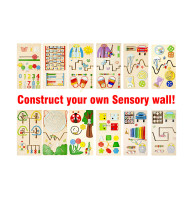
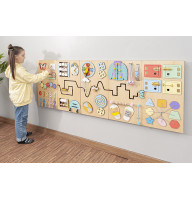
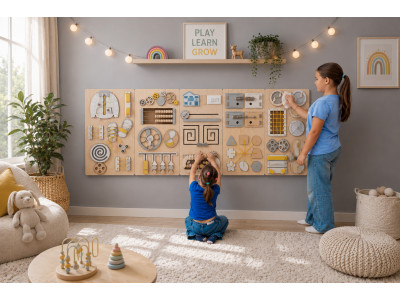
Unlike traditional toys, sensory walls engage multiple senses at once. It's a dedicated space covered in textures, shapes and interactive objects, built to stimulate an infant's senses. It stays fixed in one place, so a child returns to the same familiar spot rather than hunting for scattered toys.
What sets them apart is their open-ended nature. Instead of following instructions or rules, a child interacts with the wall however they choose. That freedom fosters creativity and independent problem-solving.
Developmental Benefits of Sensory Walls
Sensory walls are more than entertainment. Infants and toddlers return to them again and again, in part because the same wall keeps offering something new to notice. Here's what that repeated engagement actually builds:
- Fine motor skills. Turning knobs, pulling levers and sliding beads strengthens little hands. These small, repeated movements build hand-eye coordination and finger strength - skills that carry over to writing, drawing and self-care later on.
- Sensory stimulation. Varied textures, colors and sounds engage touch, sight and hearing together, helping infants process sensory input as they're just beginning to make sense of their surroundings.
- Open-ended play. With no "right" way to play, a child can experiment with cause and effect at their own pace, choosing whichever part of the wall interests them most.
- Focus and patience. Manipulating small parts takes concentration. Working through one element at a time teaches persistence in a way that carries into school-age tasks.
How to Use a Sensory Wall With an Infant
Introducing a sensory wall works best with a few simple habits:
- Introduce it slowly. Let your infant get familiar with the textures and objects at their own pace. Stand beside them and show how a few elements work, then step back and let them lead.
- Supervise playtime. Sensory walls are designed to be safe, but supervision matters, especially for younger infants.
- Adapt as they grow. Encourage your child to try new parts of the wall or new motions as their hands get more capable. The same wall keeps offering fresh challenges over time.
Additional Activities to Support Infant Development
A sensory wall pairs well with a few simple, complementary activities:
- Soft toys that are easy to grasp, especially ones with crinkling sounds or varied textures
- Sound-based toys like rattles or soft music, which help build auditory awareness over time
- Simple stacking games using soft rings or blocks, which build motor skills and early problem-solving as an infant works out how to balance them
A Toy That Grows With Your Child
One advantage of a sensory wall over most infant toys is that it doesn't get outgrown quickly. For infants, it's an early introduction to textures and shapes - bright colors and movable elements are enough to hold attention on their own.
As a child grows into toddlerhood, the same wall supports more complex tasks, like working a latch or completing a short sequence. That makes it a longer-term investment than most single-stage toys. You're not replacing it every few months as your child's abilities change.
Looking specifically for a board suited to autistic children? Our sensory wall panels for autism collection covers that in more detail.
Why BumbleBeeSmart
At BumbleBeeSmart, we design sensory walls and busy boards for infants and toddlers, made from durable, child-safe materials. We offer a range of designs to suit different interests. Every board is built with fine motor and sensory development in mind. Panels are handcrafted rather than mass-produced, so elements are checked individually before a board ships.
Frequently asked questions
What age can an infant start using a sensory wall?
Most infants can start engaging with large, simple elements from around six to twelve months, with supervision. Finer elements like zippers and latches suit older toddlers with more hand control.
Is a sensory wall safe for unsupervised infant play?
Supervision is recommended for infants and young toddlers. Choose a wall with securely fastened elements and no small parts that could detach.
Will my child outgrow a sensory wall quickly?
Not usually. The same wall tends to offer new challenges as a child's hand control improves. Simple switches work for an infant; latches and short sequences work for a toddler.
What's the difference between a busy board and a sensory wall?
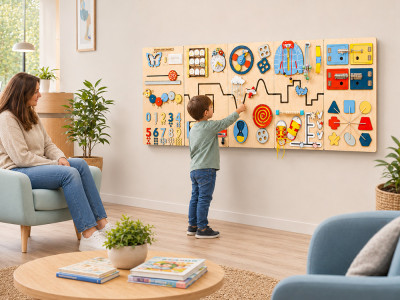
They use the same kinds of interactive elements. A busy board is typically smaller and portable. A sensory wall panel mounts permanently and works well as a fixed activity spot in a nursery or playroom.




Write a comment