


Educational toys for 3 year olds are everywhere, and almost every toy box now carries the word "educational" somewhere on it. So what does a three-year-old actually need, and does the label mean anything? This guide looks at what children are working on at this age, which kinds of toys support it, and where the label is mostly marketing. It also covers how to choose fewer, better toys rather than more of them.
What Three-Year-Olds Are Working On
Three is a busy year. Children move from simple actions to longer, more purposeful play. The details vary from child to child, but most are practicing some version of the following:
- Hand skills. Threading large beads, turning knobs, using a spoon and fork, and starting to manage simple fasteners on their own clothes.
- Language. Longer sentences, lots of questions and back-and-forth conversation during play.
- Pretend play. Feeding a doll, cooking in a play kitchen and acting out small stories from daily life.
- Sorting and early number sense. Grouping things by color or shape and noticing "more" and "less".
- Playing with others. Taking turns and sharing, which is still hard work at this age.
- Doing it themselves. The famous "I do it!" stage, where independence matters as much as the task.
The best educational toys for 3 year olds give children room to practice these things through play they choose themselves.
Do Educational Toys Actually Work?
It depends on what you mean by "work". A toy on its own does not teach a child anything. What matters is what the child does with it, and very often who is playing alongside them.
A few points are worth keeping in mind:
- The label is not a guarantee. "Educational" is a marketing term with no standard definition. Plenty of great learning toys, such as blocks, play dough and a set of cups, never use the word.
- Open-ended beats one-answer. A toy that can be used many ways keeps working as a child grows. A toy with one correct answer is often finished within days.
- Adults make a big difference. Naming what a child is doing, asking questions and playing together turns almost any toy into a learning moment.
- Screens are a separate question. Many "smart" toys do most of the work for the child. At three, hands-on toys usually give more to figure out.
So yes, good educational toys for 3 year olds are worth having. But they work best as a small, varied set used with some adult attention, not as a pile of boxes that promise results.
Types of Educational Toys for 3 Year Olds
Sorting toys by the skill they invite makes it easier to see gaps in what you already have.
Hands and fine motor control
Lacing beads, chunky puzzles with knobs, play dough, pegboards and busy boards all ask small hands to pinch, twist and place. These movements come up again later in drawing, dressing and eating. Our guide on how to develop fine motor skills covers this in more depth. For a slightly older three-year-old, peg maze boards add planning to hand work.
Language and pretend play
Play kitchens, dolls, small figures, toy animals and dress-up clothes invite stories and conversation. These toys often do more for language than toys labeled as language toys, because the child supplies the words. Pretend-play sets are some of the most underrated educational toys for 3 year olds.
Sorting, matching and early math
Shape sorters, stacking cups, counting beads and simple matching games let children group, compare and count. Color is a big part of this stage too, and our article on the power of color in early childhood development looks at why.
Building
Wooden blocks and large interlocking bricks combine hand skills with early problem-solving: what holds up, what falls, what fits. They are among the most open-ended educational toys for 3 year olds and stay useful for years.
Movement
Balls, ride-on toys, tunnels and balance games build coordination and body awareness. They also burn energy, which makes quieter play easier later in the day.
Art and messy play
Chunky crayons, washable paint, stickers and play dough let children make something of their own. They are simple, low-cost educational toys for 3 year olds, and the process matters more than the result.
Where Busy Boards and Sensory Walls Fit
A busy board gathers several hand activities in one place: latches, zippers, switches, gears and locks. For a three-year-old, the appeal is doing real-world tasks on their own, like opening a latch or turning a key, without needing an adult to set anything up.
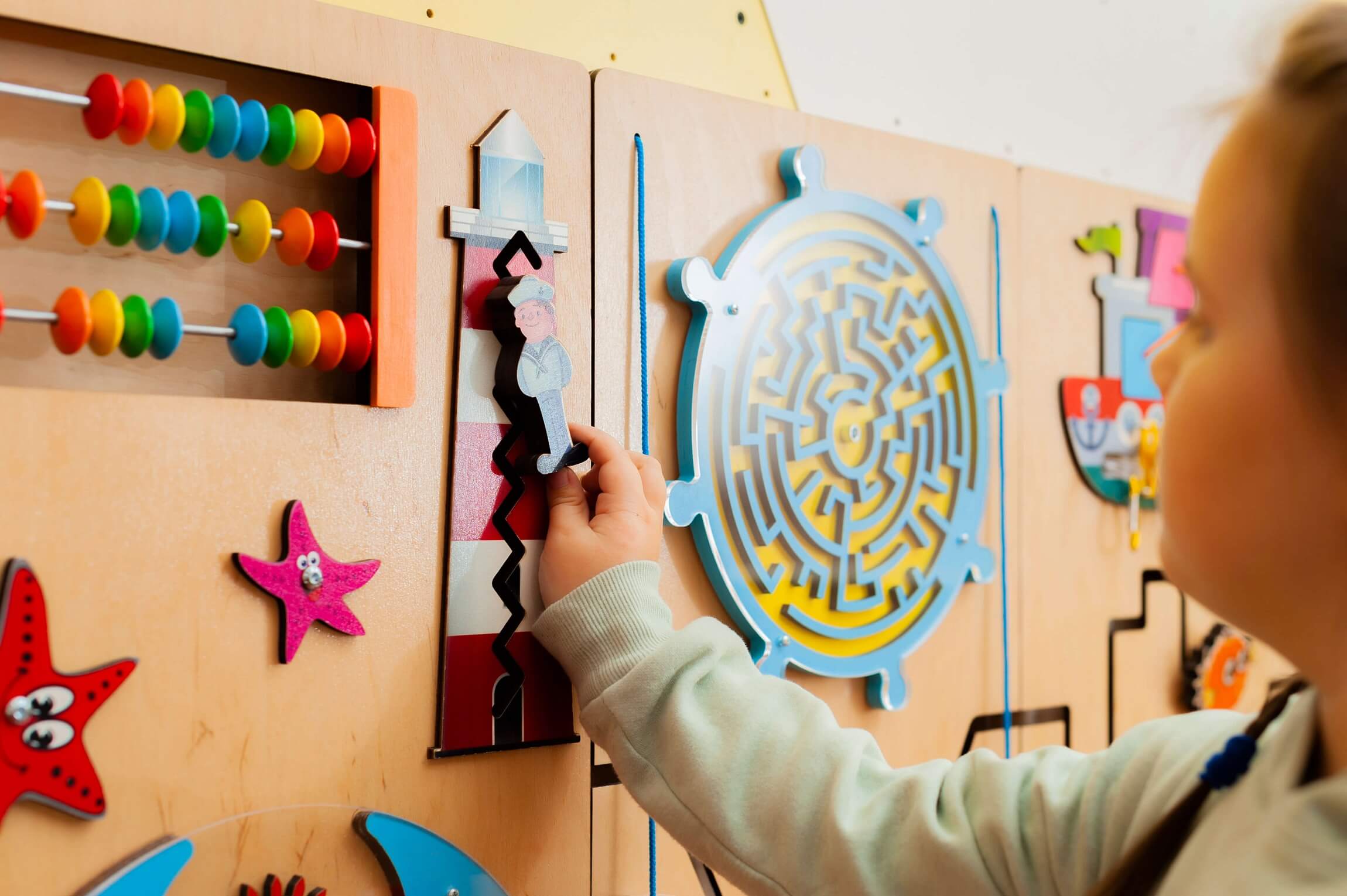
Here is an honest view of where busy boards help and where other toys do better.
Where they help:
- Many different hand movements in one toy.
- Parts stay attached, so there is nothing to lose or tidy up.
- Wall-mounted versions save floor space and suit shared rooms.
- Children can play independently for short stretches.
Where other toys do better:
- Pretend play and storytelling need figures, dolls or a play kitchen.
- Building and construction need blocks.
- Big movement needs space and balls, not a board.
If you are putting together a board or checking one before you buy, our guide to what a busy board should include lists the parts that work best at each age. Here is how our boards are made:
How to Choose Educational Toys for a 3-Year-Old
A short checklist helps when choosing educational toys for 3 year olds:
- Can it be used more than one way? Open-ended toys last longer.
- Is it a small step beyond what your child can do now? Too easy gets boring. Too hard gets frustrating.
- Does your child do the work? Toys that light up and talk on their own leave less for the child to do.
- Will it survive real use? Three-year-olds are not gentle. Solid wood and well-fixed parts hold up better.
- Is it safe for everyone in the house? Small parts may be fine at three but not for a younger sibling.
- Does it fill a gap? If you have ten puzzles and no pretend-play toys, the next toy is easy to pick.
Rotating a few toys every couple of weeks often works better than keeping everything out at once. For safety details on wall-mounted toys, see our sensory wall safety guide.
Children With Different Sensory Needs
Some children seek out lots of sensory input, while others find busy, noisy toys overwhelming. Watching how your child reacts is the best guide. Many families of autistic children look for calm, predictable, hands-on activities, and our page on sensory walls for autism-friendly spaces covers what to look for. Toys are play materials, not a treatment. If your child works with a therapist, ask which activities they suggest.
For a wider look across all ages and senses, see our guide to the best toys for sensory development. For help matching a board to your child's stage, read the best age for a busy board.
Frequently Asked Questions
What are the best educational toys for 3 year olds?
A small, varied set works best: blocks for building, a pretend-play set like a kitchen or figures, a hand-skills toy like lacing beads or a busy board, a sorting or counting toy, and art supplies. Together they cover more skills than any single toy.
Why do toddlers need educational toys?
Toddlers learn mostly through play. Toys that invite them to build, sort, pretend and use their hands give them a chance to practice skills they are already working on. The toy does not have to say "educational" on the box to do that.
How many toys does a 3-year-old need?
Fewer than most homes have. A handful of open-ended toys that cover different kinds of play is enough, especially if you rotate them. Too many toys out at once can make it harder for a child to settle into any of them.
Is a busy board still useful at age 3?
Yes. Three-year-olds can handle harder parts than toddlers, like locks with keys, buckles and gears. A board with a mix of easy and harder parts stays interesting into the preschool years.
Are electronic toys educational?
Some are, but many do most of the work for the child. A good rule of thumb: if the toy is doing more than your child is, look for something more hands-on.
Looking for a hands-on toy that grows with your child?
Shop sensory wall panels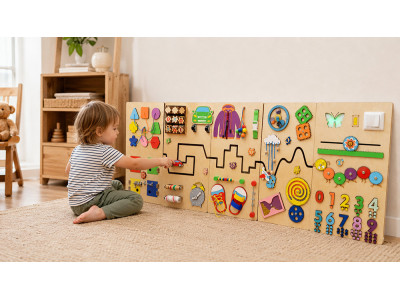


-400x300.jpg)

Write a comment