


Montessori and Pikler are two of the best-known child-led approaches in early childhood. Both ask adults to trust children, slow down and step back. Both put great weight on the environment a child plays in. Yet they grew out of different settings, focus on different ages and give the adult a different role. This guide explains what each approach is, where they overlap and the real difference between Montessori and Pikler, so you can decide what fits your home or classroom.
What Is the Montessori Method?
Maria Montessori qualified as a physician in Rome in 1896, one of the first women in Italy to do so. Her early work with children with intellectual disabilities led her to study education. In 1907 she opened her first Casa dei Bambini, or Children's House, in the San Lorenzo district of Rome.
Her approach rests on a few core ideas:
- The prepared environment. Child-sized furniture, low open shelves and a limited set of carefully chosen materials, arranged so children can work on their own.
- Practical life. Real tasks such as pouring, sweeping, buttoning and preparing food, which build independence and hand control.
- Sensorial materials. Objects designed to isolate one quality at a time, such as size, color, texture or weight.
- Freedom within limits. Children choose their own work and repeat it as long as they want, inside clear ground rules.
- Mixed-age groups. Classrooms typically span three years, so younger children learn from older ones.
Montessori wrote about development from birth to adulthood, but the approach is best known in preschool classrooms for children aged about three to six. Our article on the Montessori method of education covers the approach in more depth.
What Is the Pikler Approach?
Emmi Pikler was a Hungarian pediatrician. In the 1930s she worked as a family doctor in Budapest, where she encouraged parents to let babies move freely rather than propping them up or teaching them to sit and walk. In 1946 she founded a residential nursery on Lóczy Street in Budapest, often called Lóczy, where her ideas were put into daily practice with infants and toddlers.
The Pikler approach focuses on the first three years and rests on three main ideas:
- Free movement. Babies are never put into positions they cannot get into by themselves. They roll, crawl, sit and stand in their own time.
- Respectful caregiving. Feeding, dressing and bathing are unhurried moments of connection. The adult tells the child what is happening and waits for the child to take part.
- Uninterrupted play. Once a child's needs are met, they are left to play and explore without adults directing or entertaining them.
Wooden climbing equipment, such as the triangle that carries Pikler's name, came out of this focus on free movement. Her ideas later reached the United States through Magda Gerber, who worked with Pikler and founded the RIE (Resources for Infant Educarers) approach in 1978.
What Montessori and Pikler Have in Common
The two approaches agree on more than they disagree about. Both:
- treat the child as capable and worthy of respect from birth;
- value independence and self-directed activity over adult-led lessons;
- see the physical environment as a key part of learning;
- favor simple, natural materials over busy, electronic toys;
- protect long stretches of focused, uninterrupted play;
- ask adults to observe carefully before stepping in.
This is why many families and daycares draw on both without seeing any conflict.
Key Differences Between Montessori and Pikler at a Glance
The difference between Montessori and Pikler is mostly about age, focus and the adult's role.
| Montessori | Pikler | |
|---|---|---|
| Origin | Rome, 1907, a children's house for preschoolers | Budapest, 1930s family practice and a residential nursery from 1946 |
| Main age focus | Best known for ages 3 to 6, with programs from infancy onward | Birth to about 3 years |
| Central idea | Purposeful work with a prepared set of materials | Free movement and respectful care |
| Adult's role | Prepares the space and presents materials, then steps back | Gives full attention during care, then does not interfere with play |
| Materials | Specific learning materials, often with a built-in way to self-correct | Simple, open-ended objects and safe equipment for moving and climbing |
| Motor development | Supported through practical life and a child-sized space | At the heart of the approach; children are never placed in positions early |
In short, Montessori gives a child purposeful work and the tools to do it independently. Pikler gives a baby the freedom to discover their own body and a caregiver who is fully present during daily routines.
Can You Combine Montessori and Pikler?
Yes, and many families do. A common pattern is to follow Pikler's ideas in the first year or two, with free movement, calm routines and a safe floor space. Montessori-style practical life activities and child-sized furniture then come in as the child starts to want "real" work.
A few practical ways to bring both into a home or classroom:
- Keep a clear, safe floor area where babies can move without being propped up.
- Use low, open shelves with a small number of toys, and rotate them.
- Slow down during care routines and invite the child to help.
- Offer real tasks as soon as a child shows interest, such as wiping a table or carrying a cup.
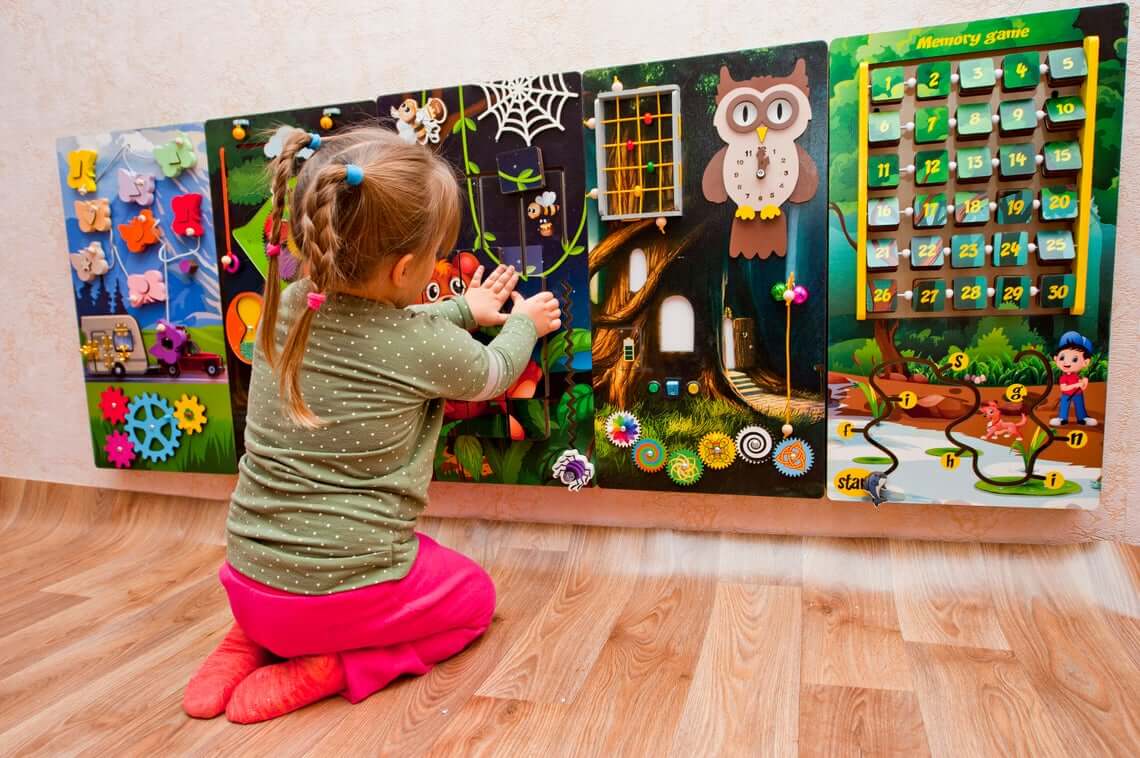
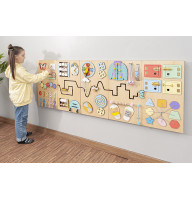
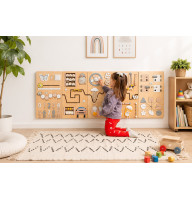
- Put activities within reach. A busy board mounted at child height lets a toddler practice latches, switches and zippers without adult help, which fits both approaches.
For a look at how child-sized spaces developed over time, see our brief history of furniture for kids.
Frequently Asked Questions
What is the main difference between Montessori and Pikler?
Pikler focuses on babies and toddlers up to about three, with free movement and respectful caregiving at its center. Montessori is best known for preschoolers aged three to six and centers on purposeful work with specially prepared materials.
Is Pikler part of Montessori?
No. They are separate approaches developed by different people in different countries. They share many values, such as respect for the child and independence, so they are often used side by side.
Which approach is better for a baby?
Neither is better in general. Pikler was designed specifically for the first three years, so many parents find its guidance on movement and care especially practical for babies. Montessori also has infant and toddler programs, and many families use ideas from both.
What is RIE, and how does it relate to Pikler?
RIE, or Resources for Infant Educarers, was founded in the United States in 1978 by Magda Gerber, who had worked with Emmi Pikler in Budapest. It brings many of Pikler's ideas about respectful care and free play to English-speaking parents and caregivers.
Looking for hands-on activities children can reach on their own?
Explore sensory wall panels



Write a comment