


These days you can buy child-sized chairs, low shelves and wall-mounted activity boards from any online store. It hasn't always been that way. For much of history, children lived in a world built for adults and were often treated as small adults themselves. Ideas about childhood changed a great deal in the 19th and 20th centuries, and furniture changed with them. Educators such as Maria Montessori played a large part in that shift.
Children's Furniture in Ancient Times
Some of the earliest examples of furniture made with children in mind come from the ancient world. Archaeological finds suggest that wealthier families sometimes had smaller pieces made for children. Stools and small beds are the most common examples.
Ancient Greece left one of the most memorable examples: a terracotta potty chair. The child sat on a tall clay seat with legs on either side, which kept them upright and in view. It worked as a high chair and a potty in one. An adult could keep an eye on the child while doing other tasks.
Cradles have existed for centuries in many cultures. For most of history, though, children used the same furniture as adults, or simply went without.
Children's Rooms in the 19th Century
Industrialization and changing attitudes toward childhood, especially in wealthier households, led to rooms set aside just for children. Early Victorian nurseries were often simple sleeping rooms with a row of beds. They were run by a nanny rather than designed around the child.
Another important development was bentwood furniture, popularized by the cabinet maker Michael Thonet. His workshops produced a large catalog of light, practical and long-lasting chairs, including models made for children. From then on, families could buy affordable, mass-produced furniture that was light enough to move around.

Montessori and the Child-Sized Classroom
The biggest change came in the early 20th century. Maria Montessori opened her first Casa dei Bambini in Rome in 1907. She wanted a room where children could do things for themselves. Heavy school desks bolted to the floor did not allow that.
Instead, her classrooms had small tables and chairs light enough for young children to carry and rearrange on their own. Materials sat on low, open shelves so children could choose an activity and put it back without help. She called this the "prepared environment". It is a space arranged so a child can move freely, choose their own work and learn at their own pace.
That idea shaped almost every early childhood classroom that followed. Child-height furniture, open shelving and freedom of movement are now everywhere. It is easy to forget they were once radical. Our article on the Montessori method of education explains the wider approach behind them.
Bauhaus and Modern Design for Children
A little later, designers at the Bauhaus school in Germany also turned their attention to children. The school built a model house, the Haus am Horn, in 1923. For it, designer Alma Siedhoff-Buscher created a children's room with modular, brightly colored furniture that doubled as play equipment. Pieces could be rearranged, stacked or used as a small stage, so the room changed with the child's play.
Her work showed that furniture for children did not have to be a small copy of adult furniture. It could be designed around how children actually play.
Children's Spaces Today
Modern children's rooms and classrooms draw on both traditions. From Montessori comes the focus on independence. From modernist design comes the idea that furniture can be part of play. Safety has also become central, with rounded edges, stable construction and child-safe finishes now standard expectations.
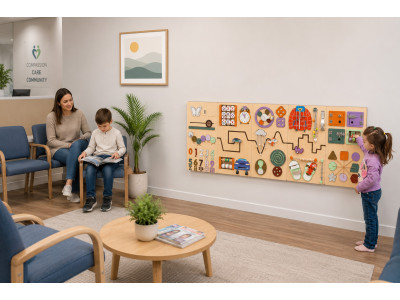
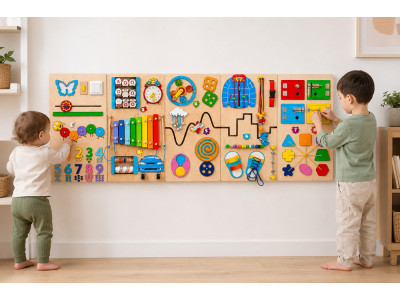
Walls have become part of the picture too. Activity boards and panels mounted at child height turn unused wall space into something children can reach and use on their own. They add play without adding clutter to the floor. Working at a vertical surface also gives children a different posture from sitting at a table. Our article on the benefits of vertical surface activities explores this in more detail.
What Hasn't Changed
Across all these periods, one idea keeps coming back. Children do more for themselves when the things they need are within reach. A low shelf, a light chair and a board at the right height all say the same thing to a child: this space is yours to use.
That is still the best test for any piece of children's furniture. Ask whether a child can reach it, use it and put it back without help. If the answer is yes, it is doing its job.
What BumbleBeeSmart Makes
At BumbleBeeSmart, we believe a child's environment should be safe, accessible and designed so children can explore on their own. Our sensory wall panels and busy boards are mounted at child height and have rounded corners. They are sealed under a water-based lacquer for easy cleaning. They fit anywhere from a home playroom to a preschool classroom.




-400x300.jpg)
Write a comment