


-1200x900.jpg)
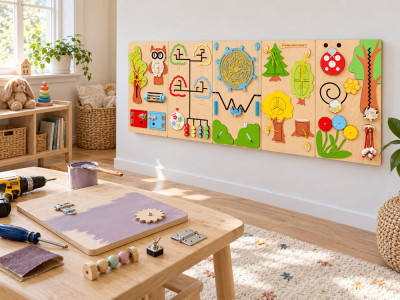
Busy boards are more than simple toys. A well-designed busy board combines sensory play, fine motor development and hands-on learning in a durable product that children can enjoy for years. At BumblebeeSmart, every busy board is carefully designed and assembled with safety, quality and child development in mind.
Our goal is to create engaging activity boards that encourage curiosity, independent play, and skill development while withstanding daily use in homes, classrooms, daycare centers, therapy clinics, and waiting rooms.
Designing a Busy Board That Children Love
Every busy board begins with a design concept. We carefully select activities that encourage children to explore, manipulate objects and practice important developmental skills. Popular elements include switches, latches, gears, spinning components, tracing activities, and tactile features that promote hands-on learning.
When designing a busy board, we consider:
- Age-appropriate activities
- Fine motor skill development
- Hand-eye coordination
- Sensory engagement
- Durability and safety
- Long-term educational value
Choosing Safe and Durable Materials
Quality begins with materials. We carefully select durable components and sturdy wooden panels that can withstand years of active play. Every element is chosen not only for its educational value but also for its safety and reliability.
Our busy boards feature securely mounted components and smooth finishes designed for everyday use in educational and commercial environments.
Hand-Assembled With Attention to Detail
After the design and material selection process is complete, each busy board is assembled with attention to detail. Components are carefully installed, tested, and inspected to ensure smooth operation and durability.
Every board undergoes a quality inspection before shipment to verify that moving parts function properly and that all hardware is securely attached.
Our Production Process in Action
Why Busy Boards Support Child Development
Busy boards encourage children to engage in activities that strengthen fine motor skills, coordination, concentration, and problem-solving abilities. By interacting with different elements, children practice movements that support everyday tasks such as writing, dressing, and using classroom tools.
- Fine motor skill development
- Hand-eye coordination
- Problem-solving abilities
- Independent play
- Concentration and focus
- Sensory exploration
For children who benefit from additional sensory experiences, we explain how busy boards support autistic children, and we offer larger Sensory Walls for Autism designed for classrooms, therapy centers, and sensory rooms.
Designed for Homes, Schools, and Therapy Centers
Our busy boards are used by families, educators, therapists, and childcare professionals throughout the United States. Their compact design makes them ideal for homes, while their durability makes them suitable for classrooms, daycare centers, libraries, waiting rooms, and therapy environments.
Many organizations also choose our Sensory Wall Panels to create engaging sensory activity areas that support learning through play.
Custom Busy Boards and Sensory Solutions
Every learning environment is different. In addition to our standard products, we offer custom sensory wall installations and activity panel solutions designed to fit specific spaces and educational goals.
Whether you are furnishing a classroom, therapy center, waiting room, or sensory space, our team can help create an engaging environment that supports child development through interactive play.
Our Sensory Wall Production Process
Frequently Asked Questions
Are busy boards handmade?
Each busy board is carefully assembled and inspected to ensure quality, durability, and safe operation before shipment.
What materials are used in busy boards?
Busy boards typically combine durable wooden panels with interactive components such as latches, switches, gears, locks, and sensory elements selected for educational value and long-term durability.
Are busy boards safe for children?
Quality busy boards are designed with child safety in mind and feature securely attached components, smooth finishes, and durable construction suitable for supervised play.
What skills do busy boards help develop?
Busy boards help develop fine motor skills, hand-eye coordination, concentration, sensory exploration, problem-solving abilities, and independent play skills.
Where are busy boards commonly used?
Busy boards are commonly used in homes, daycare centers, preschools, classrooms, therapy clinics, waiting rooms, libraries, and sensory spaces.
Related Articles
Learn more about busy boards, sensory play, and educational activity panels with these helpful articles:
- What Is a Busy Board? – Discover how busy boards support fine motor development, sensory exploration, and independent learning through hands-on activities.
- What Should a Busy Board Include? – Explore the most popular components and activities commonly found on high-quality busy boards.
- What Is the Best Age for a Busy Board? – Learn when children can benefit most from busy boards and how activities can be matched to different developmental stages.
- How Long Do Kids Play With Busy Boards? – Understand why interactive activity boards continue to engage children as they develop new skills and interests.
- Interactive Busy Board Activities – See examples of engaging activities that encourage problem-solving, creativity, and fine motor development.
- What Can You Use a Busy Board For? – Discover how busy boards are used in homes, classrooms, daycare centers, waiting rooms, and therapy environments.
- Choosing Sensory Wall Panels – Learn how larger sensory walls are designed and how they complement busy boards in educational and therapeutic spaces.
- Why Is Sensory Play Important for Autism? – Explore the role of sensory activities in supporting learning, engagement, and skill development.


Write a comment