


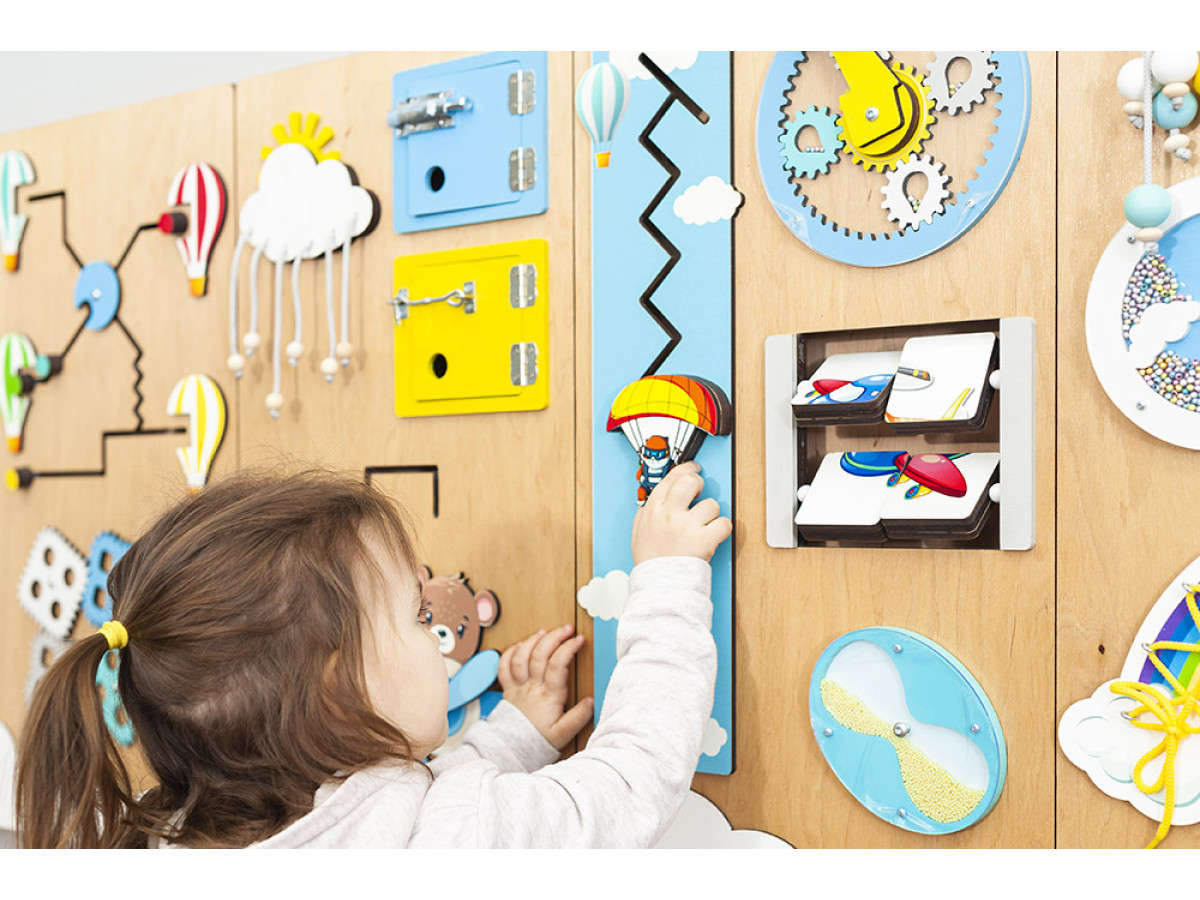
A busy board with locks, zippers and buttons gives an autistic child a compact, portable way to practice hand skills at their own pace. The format traces back to Maria Montessori's early "practical life" panels. The idea still holds up: real, functional hardware a child can operate themselves, with no toy version standing in for the real thing.
This guide focuses specifically on the busy board format - a single portable panel, as opposed to a larger wall-mounted installation. For the fuller picture of why sensory play matters and what the research actually shows, see our guide to sensory play and autism. If you are planning a larger wall-mounted installation for a classroom, clinic or therapy room instead, see our sensory wall panels for autism.
What Makes a Busy Board Work Well for an Autistic Child
A few practical qualities matter more than how many elements a board has:
- Predictable behavior. A latch that always opens the same way, a switch that always does the same thing - that consistency is often what makes a board engaging rather than frustrating.
- Functional elements. A working latch or switch gives real cause-and-effect feedback. Decorative elements with no actual function tend to hold interest far more briefly.
- A calm, restrained palette. Classic Montessori boards favor a muted, uniform color scheme. That way, a child's attention goes to how each element works, not to a busy visual field competing for attention.
- Secure, durable construction. Elements should be mechanically fastened, not glued, and able to withstand repeated, sometimes forceful use.
What It Can Help With
Working the elements - turning, sliding, unlatching - builds the same fine motor control used later for buttoning a shirt or holding a pencil. For many autistic children, the appeal is also the predictability itself. It behaves the same way every time, with no social script to read and no way to get it "wrong."
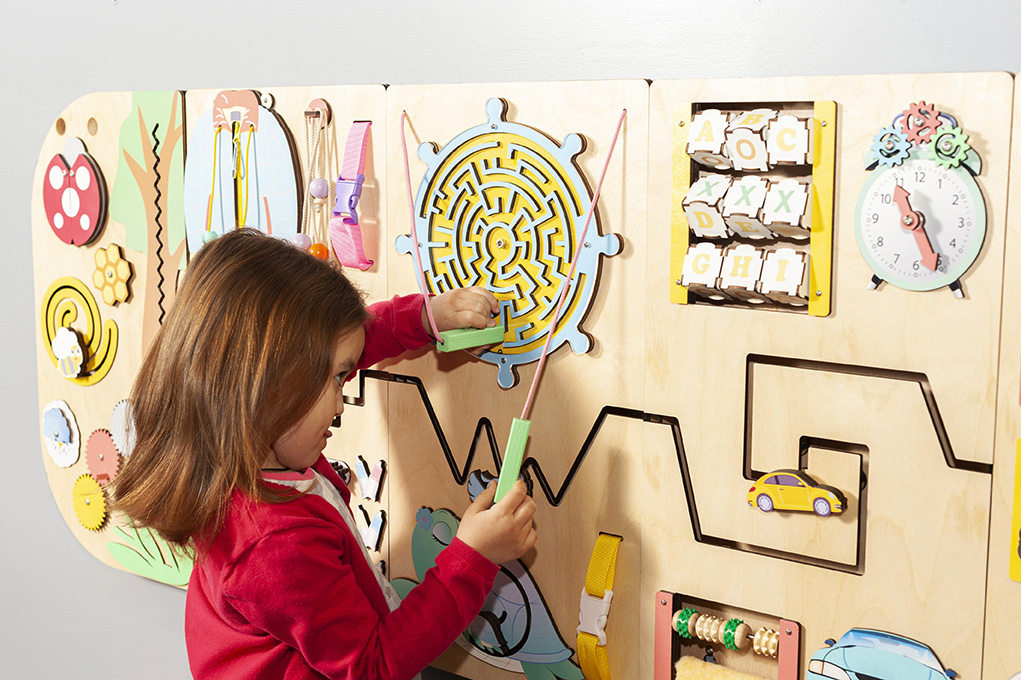
A board can also become a shared point of focus with a parent or sibling. Naming what's happening while a child works an element - "the switch is on now" - builds vocabulary in context. It doesn't require the child to initiate the exchange.
Choosing Elements That Fit
Match the elements to the child rather than to a generic "autism" theme. A child who seeks strong tactile input might do best with textured surfaces and heavier mechanisms. A child who's more visually driven might respond better to elements with clear, immediate feedback, like a switch or a spinning gear.
Age matters too. Larger, simpler elements - big latches, wide switches - suit younger children and anyone still building hand strength. Finer elements like small zippers or shoelace-tying practice suit children with more developed grip and dexterity.
Safety Basics
Check that nothing on the board can be pulled loose. Small parts that detach are a choking risk, especially for a child who explores with their mouth as well as their hands. Look for non-toxic, water-based finishes, and rounded edges rather than sharp corners. A board gets handled with real force sometimes, so secure fastening matters more than it might first seem.
This Format or a Sensory Wall?
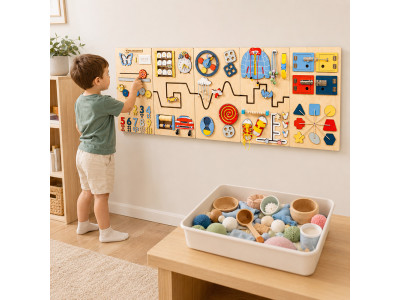
A portable panel is the right starting point for most homes. It's inexpensive relative to a full installation, and easy to place wherever a child spends time. For schools, therapy centers, waiting rooms and other shared spaces, a larger sensory wall panel installation usually makes more sense. Several elements, or several children, can be in use at once.
Our complete buying guide for autism sensory walls covers sizing, features and layout in depth if you're planning a larger installation rather than a single panel.
Frequently asked questions
What age should a child be to start using one?
There's no fixed age. Many children start around one to two years old with large, simple elements. Hand strength and interest matter more than age - follow the child's lead rather than a set timeline.
How long will a child stay interested?
Interest often comes in waves rather than steadily declining. A child may return to a familiar board after a break, especially if elements are swapped or a new one is introduced. Many children play with the same board, on and off, for a year or more.
Should I choose a themed design or a plain one?
Either can work. A calmer, more uniform design keeps attention on how each element functions, which suits children who are easily visually overstimulated. A themed design can work well for a child who's motivated by a specific interest.
Busy boards and sensory wall panels are activity and engagement products, not medical devices or therapy tools. They don't diagnose, treat or cure autism. They're not a substitute for occupational therapy, speech therapy or other professional support a child may need.


Write a comment