


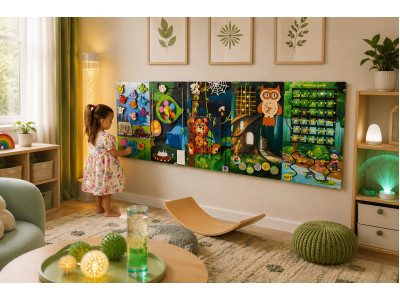
Creating an inclusive sensory environment allows children of all abilities to explore, learn and play together. Thoughtfully designed sensory wall panels provide opportunities for tactile exploration, fine motor development and independent play while supporting children with autism, sensory processing differences and other developmental needs.
Whether you are designing a preschool classroom, therapy clinic, waiting room or sensory room, modular sensory wall panels create an engaging activity area that encourages participation from every child.
Key Elements of Inclusive Sensory Walls
Inclusive sensory walls should feature a mix of tactile, visual and auditory elements to engage multiple senses. This variety ensures that children with different sensory preferences or processing abilities can find activities that they enjoy.
Elements on the busy board should be adjustable in height and complexity. This flexibility allows children of different ages and abilities to interact with the sensory wall comfortably.
Safety is paramount. Use materials that are safe for all users, avoiding small parts that could be choking hazards or sharp edges that could cause injury. Ensure that the design is accessible to children with physical disabilities, such as those using wheelchairs.
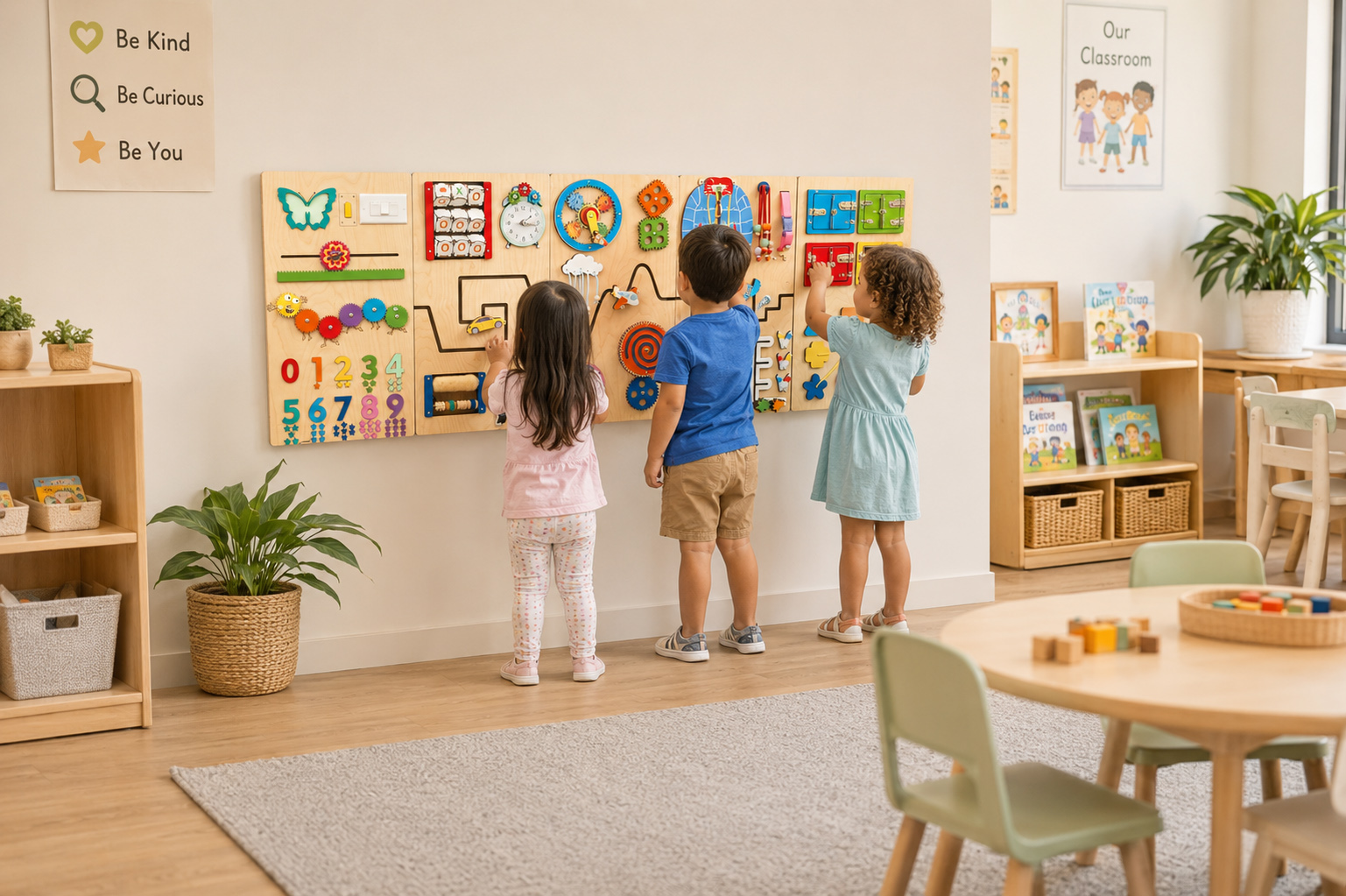
Looking for Sensory Walls Designed for Autism?
Explore our collection of Sensory Walls for Autism designed for schools, therapy clinics, waiting rooms and autism-friendly environments.
Design Considerations
Incorporate a variety of textures such as soft fabrics, smooth surfaces and bumpy materials. Tactile elements cater to children with tactile sensitivities or preferences, allowing them to explore different textures in a controlled way.
Use bright colors, lights and contrasting patterns. Visual stimulation is essential for children with visual impairments or those who benefit from visual engagement.
Include sound-producing items like bells, whistles, and switches that play music. These elements support auditory processing and provide auditory feedback, making the busy board engaging for children who enjoy sounds.
Fine and Gross Motor Skills
Design activities that develop both fine motor skills (e.g., buttons, zippers) and gross motor skills (e.g., large knobs, levers). These activities help children improve their motor skills while playing.
Examples of Inclusive Busy Board Activities
- Tactile Sensory Exploration
- Description: A section with different textured materials like faux fur, sandpaper and bubble wrap.
- Benefit: Helps children with tactile sensitivity explore various textures.
- Visual Stimulation Panel
- Description: Items like colorful spinners, LED lights, and high-contrast images.
- Benefit: Engages children with visual impairments or those who enjoy visual stimuli.
- Sound Interaction Zone
- Description: Musical buttons, bells and sound tubes;
- Benefit: Supports auditory processing and provides auditory feedback.
- Interactive Learning Modules
- Description: Letters, numbers, shapes, and puzzles.
- Benefit: Combines play with cognitive development, suitable for children with different learning needs.
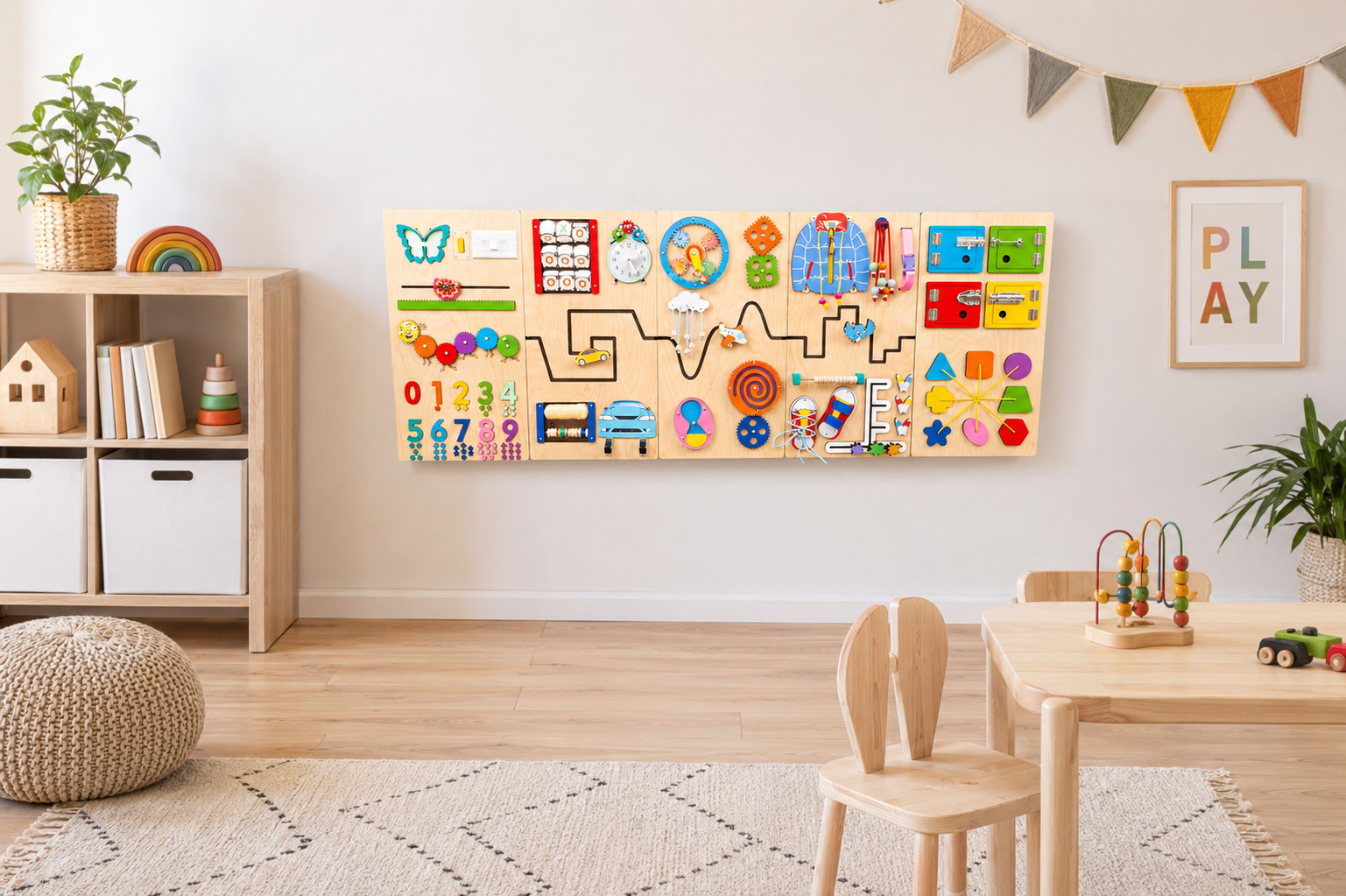
Involving the Community: Collaboration with Experts
Collaborate with occupational therapists, special education teachers, and parents to design effective busy boards. Their expertise ensures that the sensory walls cater to various abilities.
Seek feedback from children and their caregivers to continuously improve the designs. Adapt the busy boards based on this feedback to ensure they remain engaging and accessible.
Benefits of Inclusive Busy Boards
Busy boards for all abilities enhance fine motor skills, sensory processing, and cognitive abilities. They provide an engaging way for children to develop essential skills.
Inclusive play promotes social interaction and a sense of community among children of different abilities. Sensory walls for all abilities ensure that every child feels included.
Inclusive busy boards positively impact children's emotional well-being by providing a sense of achievement and belonging. They offer a space where children can play and learn together.
Designing Sensory Wall for all abilities is a crucial step toward creating inclusive play environments. By considering the diverse needs of children and incorporating a variety of sensory inputs, adjustable features, and safe, accessible designs, we can ensure that every child enjoys and benefits from play.
Create an Inclusive Sensory Space
Whether you're designing a therapy room, autism classroom, pediatric clinic or inclusive play area, our modular sensory wall panels help create engaging environments that encourage sensory exploration and independent learning.
Browse our Sensory Walls for Autism or customize your own installation using our DIY Sensory Wall Builder.
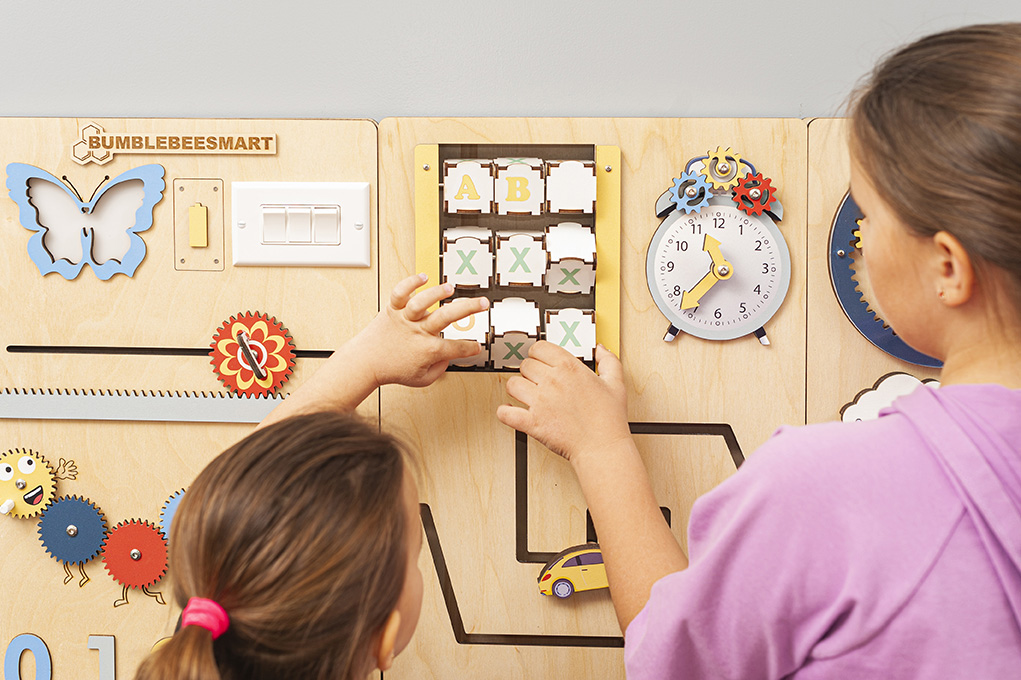
Recommended Sensory Wall Solutions
Every child has unique sensory preferences, which is why we offer modular sensory wall solutions that can be adapted for homes, autism centers, schools, therapy clinics and inclusive learning environments.
- Sensory Wall Set in Neutral Colors – a versatile wall-mounted sensory activity panel set designed for classrooms, therapy clinics, autism centers and inclusive learning spaces.
- DIY Sensory Wall in Pastel Colors – a ready-to-install modular sensory wall featuring calming pastel colors, ideal for autism-friendly playrooms, therapy rooms, preschools and waiting areas.
If you're planning a larger installation for a school, therapy clinic or community center, our modular systems can be expanded over time and customized to fit almost any wall.


Write a comment