


"What are fine motor skills, and is my child on track?" is one of the most common questions parents search for. So is "what fine motor games actually help?" Fine motor skills are the small, precise movements of the fingers and hands. Picking up a raisin. Turning a page. Buttoning a coat. Holding a pencil. They develop gradually, through repeated hands-on practice. They matter well beyond arts and crafts: they're the foundation for dressing, feeding, writing and dozens of daily tasks.
This guide covers what these skills are, roughly what to expect at each age, specific games that build them, and what to actually look for in a busy board rather than a bin of loose toys.
Fine motor skills vs. gross motor skills
Motor development is generally split into two categories. Gross motor skills involve the large muscles of the legs, arms and core: walking, climbing, throwing a ball. The smaller hand and finger muscles work differently. They're coordinated closely with vision and the nervous system, and they take longer to develop. Typing, threading a bead, using scissors, zipping a jacket: all of these depend on that finer control. Gross motor skills tend to develop first and more visibly. The finer ones take more repetition, and more patience from both child and parent.
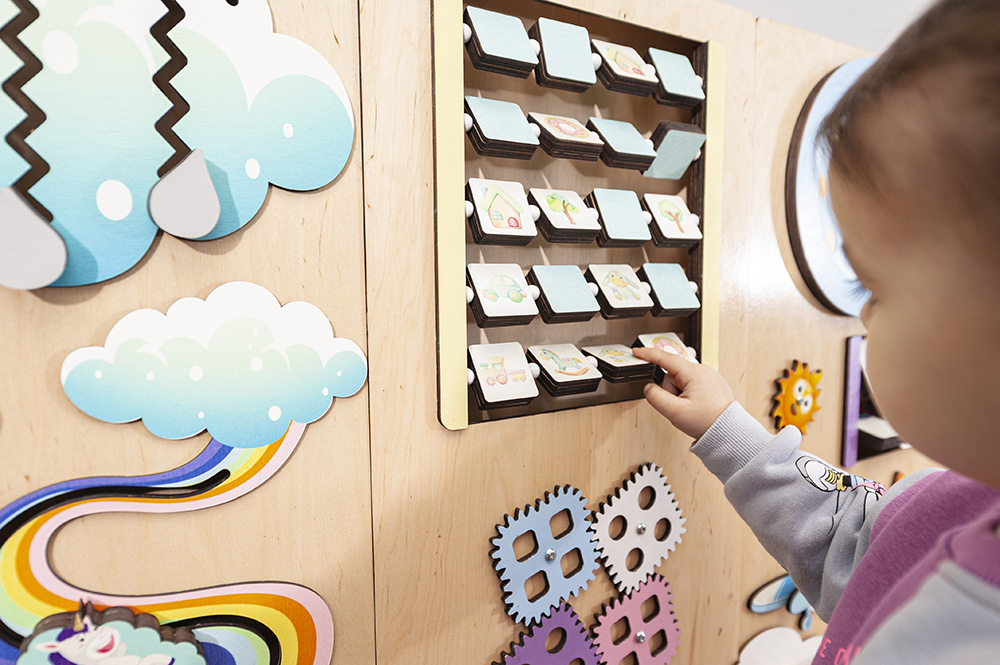
Fine motor milestones by age
Every child develops at their own pace. The ranges below are general guidance, not a checklist to worry over, but they're a useful reference point for choosing age-appropriate activities.
- 0-12 months. Reaching, grasping with a full hand, transferring objects between hands. By the end of the first year, a pincer grasp (thumb and forefinger) for picking up small items.
- 1-2 years. Stacking a few blocks, scribbling with a fat crayon, turning board-book pages, feeding themselves with fingers or a spoon.
- 2-3 years. Turning knobs and dials, stringing large beads, holding a crayon with more control, unzipping (and attempting to zip) a jacket.
- 3-4 years. Using child-safe scissors, copying simple shapes, buttoning large buttons, building taller block towers.
- 4-5 years. Cutting along a line, drawing simple figures, managing zippers and buttons independently, holding a pencil with a more mature grip.
- 5-6 years. Writing letters and numbers, tying shoelaces, using a fork and knife together, more complex cutting and assembly.
For a closer look at matching activities to a specific age, see BumbleBeeSmart's guide on what age is right for a busy board.
Fine motor games and activities you can try at home
You don't need special equipment to start. Many good games use things already in the house:
- Threading and lacing. Large beads on a shoelace, or a lacing card, build the pincer grasp and hand-eye coordination.
- Pouring and transferring. Moving dry rice or water between two cups with a small scoop strengthens wrist control.
- Tongs and tweezers. Picking up pom-poms with kitchen tongs is a favorite for building finger strength.
- Playdough and putty. Squeezing, rolling and pinching builds the same hand muscles used for pencil grip.
- Clothespins. Clipping clothespins to a box or piece of cardboard is simple. It's also surprisingly effective.
- Sorting by color. Sorting beads, pom-poms or blocks into color groups adds a thinking task to the same pinch and grasp. It also fits the age when toddlers learn colors.
- Tracing and pre-writing. Tracing shapes, letters or mazes builds the control needed for handwriting later on.
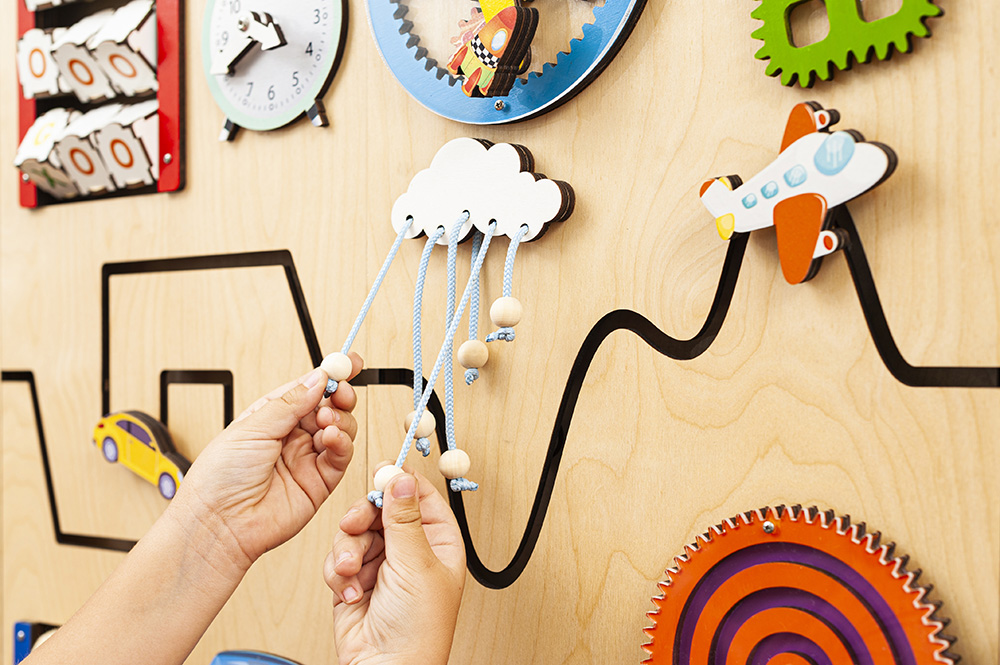
These work well as standalone games. But a lot of families eventually look for something that bundles several of them into one place a child can return to on their own. That's exactly what a busy board is designed to do. Peg maze boards take a similar approach, built around repeated, precise hand movement.
Looking for a board that grows with these activities?
BumbleBeeSmart's peg maze boards are built around the same threading, tracing and precision movements listed above, in a single wall-mounted panel.
What to look for in a fine motor skills board
Not every busy board is built the same way. The difference shows up fast once a child starts using it daily. A few things worth checking before buying:
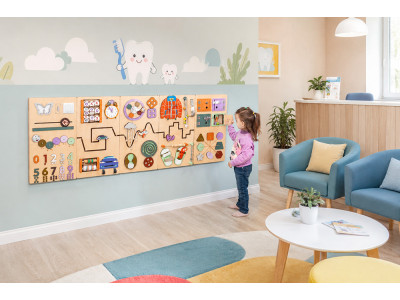
- A genuine mix of mechanisms. Latches, zippers, gears, dials, sliders and buckles each train a slightly different grip and movement. Look for variety, not five versions of the same motion.
- Secure, mechanically fastened parts. Elements that are screwed or bolted in place hold up to repeated pulling and twisting far better than glued pieces.
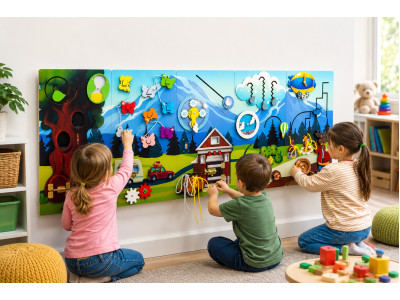
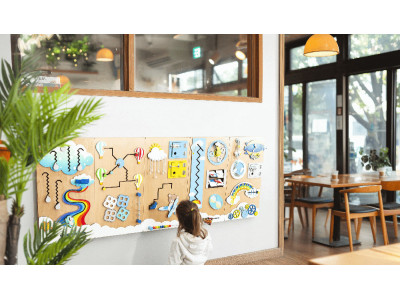
- A size that matches the space and the child. A small panel suits a bedroom corner. A larger multi-panel set suits a playroom, classroom or waiting area where several children use it at once. Browse BumbleBeeSmart's full range of sensory wall panels for options at both scales.
- Wall-mounted rather than loose. A fixed panel doesn't get kicked under furniture, doesn't lose pieces, and is easier to wipe down than a bin of small toys. BumbleBeeSmart's comparison of wall-mounted vs. freestanding busy boards (including tabletop-style activity tables) walks through the trade-offs in more depth.
For a broader look at what makes a panel worth buying, see BumbleBeeSmart's guide to choosing sensory wall panels. Not sure a busy board is the right format at all? Our explainer on what a busy board is is a good starting point.
Adding visual and interactive elements
This kind of practice doesn't have to be purely mechanical. Some children stay engaged longer when a panel adds a visual layer to the same hand movements, such as a light that responds to a touch rather than a sound. BumbleBeeSmart's interactive wall panels pair that gentle visual feedback with the same underlying mechanisms. It can help hold the attention of a child who loses interest in a plain panel quickly. For families weighing a fully wall-mounted setup, BumbleBeeSmart's wall-mounted busy boards collection covers both plain and interactive formats side by side.
Why this practice is worth the investment
Children who get regular, varied practice tend to handle everyday self-care tasks with more independence and less frustration. That includes dressing, eating and using scissors. That independence carries over. Kids who can manage small tasks on their own tend to approach new challenges with more confidence. They also arrive at school already comfortable holding a pencil and manipulating small objects, which makes early writing and classroom tasks less of a hurdle.
None of this requires expensive equipment or a strict schedule. A few minutes a day with threading, tongs, playdough or a busy board is enough to build real progress over weeks and months. Work it into ordinary play rather than treating it as a lesson.
Frequently asked questions
What is the difference between fine motor and gross motor skills?
Gross motor skills use the large muscles of the arms, legs and core for movements like walking or throwing. Fine motor skills use the smaller muscles of the hands and fingers for precise movements like grasping, threading or writing.
At what age should fine motor skills develop?
They develop gradually from infancy through the early school years. Basic grasping starts before one year old. Skills like cutting, buttoning and a controlled pencil grip typically continue developing up to age five or six. Every child's pace varies.
What are some good fine motor games for toddlers?
Threading large beads, transferring rice between cups, picking up small objects with tongs, playing with playdough, and clipping clothespins are all simple, effective games. Most families already have everything they need at home.
What should I look for in a fine motor skills board?
Look for a genuine variety of mechanisms: latches, gears, zippers, dials. Look too for parts that are mechanically fastened rather than glued, a size appropriate to the space, and wall mounting rather than a loose, freestanding format.
Can a busy board really help with hand coordination?
Yes. A well-made busy board combines several hand movements, such as turning, sliding, latching and threading, in one place a child can return to repeatedly. That repeated practice is exactly what builds these skills over time.
Should I be worried if my child seems behind on these skills?
Occasional variation is normal, because children develop at different paces. If a child consistently struggles well past the typical range for their age, or loses a skill they previously had, it's worth mentioning to a pediatrician or occupational therapist.
Related reading
These skills build gradually, through repeated, low-pressure practice rather than any single activity. A mix of everyday games and a well-made board, one with varied and securely fastened mechanisms, gives a child plenty of reasons to keep practicing on their own.
Educational guide from the BumbleBeeSmart blog. Milestones are general reference ranges, not a diagnostic checklist. Not medical advice. Consult a pediatrician or occupational therapist with individual concerns.






Write a comment