


BumbleBeeSmart · Definitional guide · 9-minute read
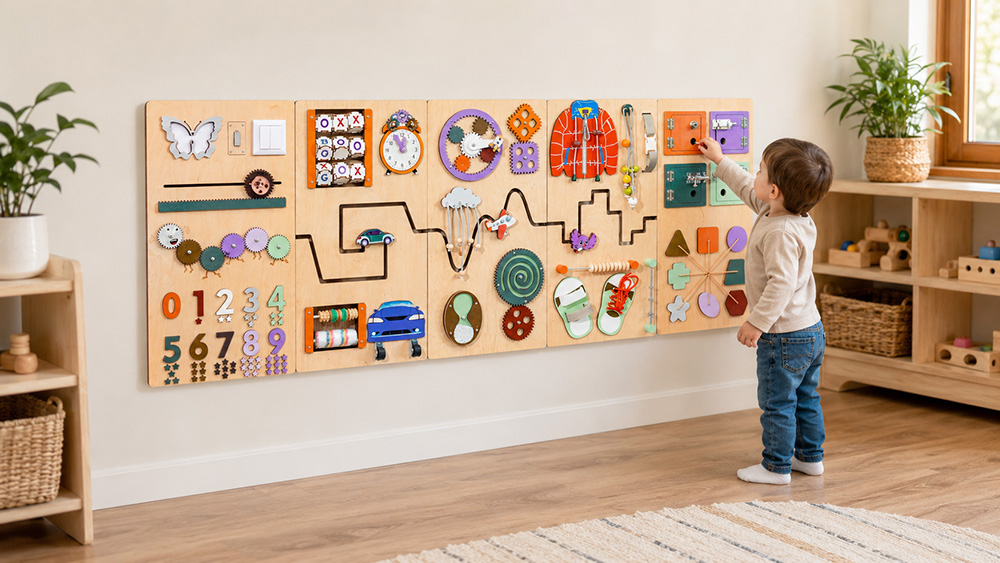
A busy board is a flat activity panel covered in real, working hardware. Locks, latches, gears, zippers, switches and spinners are the usual mix. A child operates each piece by hand. A wall-mounted board stays fixed in one place, so the same child can come back to the same spot every day; freestanding and travel formats trade that fixed position for portability, covered further down. This guide covers what a busy board actually is, where the idea comes from, what it does for a child's development, and how it differs from a few related products you'll see mentioned alongside it.
What Is a Busy Board, Exactly?
A busy board is a wall-mounted or freestanding panel built around one core idea. It gives a child mechanisms to manipulate that function the way they look like they should, not miniature or symbolic ones. A latch actually latches. A light switch actually clicks. A zipper actually zips. That distinction matters. Children are drawn to the objects adults use every day. A busy board lets them practice on functional hardware, selected and positioned for children to operate safely, rather than a simplified toy version.
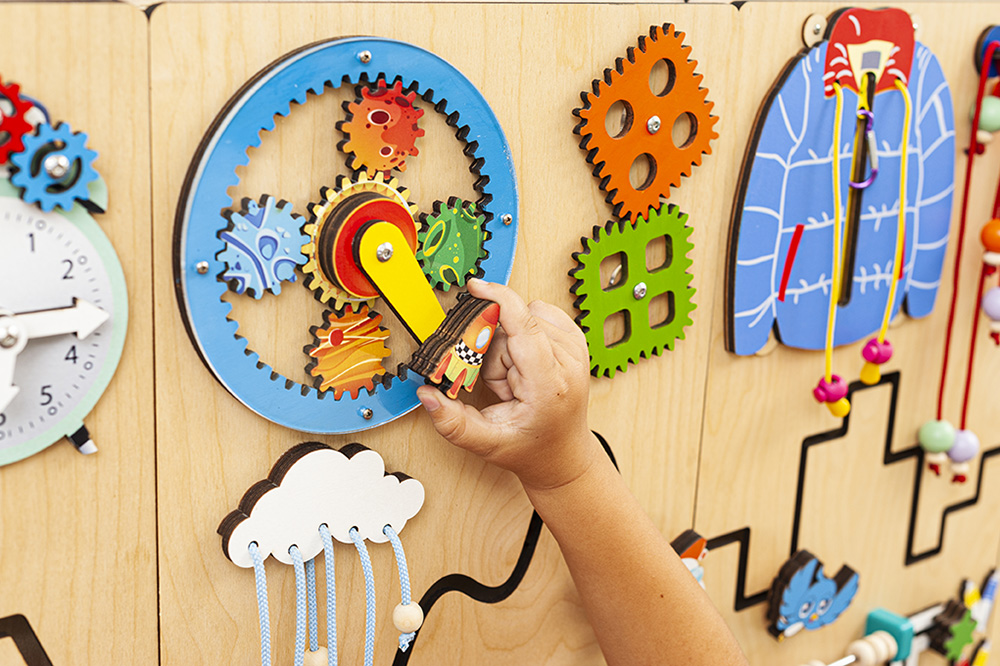
Most boards combine several element types on one panel. Tactile pieces cover textures, fabric and beads. Mechanical pieces cover locks, hinges and sliders. Some boards add visual or auditory pieces, like mirrors, bells or a small xylophone. A single board might hold five to twelve elements, depending on size. For a category-by-category list of what typically goes on one, see our guide to what a busy board should include.
A note on naming. "Busy board" and "sensory board" are used interchangeably by most parents and in most search results. At BumbleBeeSmart we use "busy board" for a single compact panel and reserve "sensory wall panel" for larger, multi-panel installations - see the comparison section below.
Where the Idea Comes From
Busy boards sit in a long tradition of "practical life" activities in early-childhood education. The tradition is most closely associated with the Montessori method, which favors real, purposeful tasks over symbolic play. Montessori practical-life activities give children opportunities to practice purposeful, everyday movements using functional materials, including dressing frames that let a child work with buttons, buckles and zippers on a small, sturdy frame sized for their hands. Modern busy boards combine several practical mechanisms on a single activity panel. There does not appear to be one documented inventor or origin point for the modern product category; it became a mainstream category sold by manufacturers like BumbleBeeSmart over time.
See a Busy Board in Action
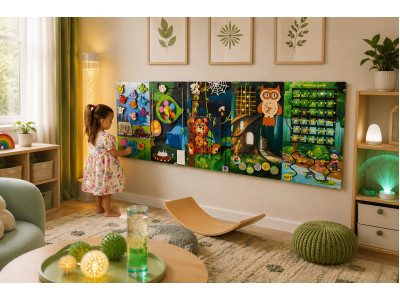
Browse handcrafted busy boards built for homes, classrooms and clinics - wall-mounted, ages 1 to 8, non-toxic birch plywood with mechanically fastened elements.
What a Busy Board Does for a Child
The value of a busy board comes down to repeated, hands-on practice a child can return to on their own. A 2019 American Academy of Pediatrics clinical report on toy selection highlights fine motor, adaptive and manipulative toys, such as blocks, puzzles and hands-on mechanisms, as one of the toy categories that support development and caregiver-child interaction.[1] The report makes that case for developmentally appropriate, hands-on toys generally; it doesn't study busy boards specifically, so we're citing it as supporting context for the category, not as direct evidence about this exact product.
In practical terms, that translates to a few specific benefits:
- Fine motor practice. Turning a latch, sliding a zipper or twisting a gear gives children practice using the small hand and finger movements involved in buttoning, handling utensils and later writing tasks.
- Cause and effect. Flip a switch, hear a click. A busy board provides a simple cause-and-effect experience a child can repeat on their own.
- Independent, screen-free play. A busy board needs no screen and, for most designs, no batteries or power. A child can return to it alone and explore at their own pace, with the same supervision that applies to any age-appropriate toy.
- Focus and problem-solving. Working out how a specific mechanism opens can encourage a child to spend time working through it. Trying again when it doesn't work invites repeated attempts and basic problem-solving.
Busy Board vs. Sensory Wall Panel: What's the Difference?
The two terms overlap heavily in everyday use. The practical difference is mostly one of scale. A busy board is usually a single panel or small set built around one activity mix - the right choice for a bedroom corner, a travel bag, or an individual child's space. A sensory wall panel installation is built to become part of something larger. Multiple panels combine into a wall system for a shared space, like a classroom, waiting room or therapy center. For the fuller breakdown, including sizing guidance, see how sensory wall panels differ from busy boards.
Busy Board Formats
Busy boards come in a few physical formats. Each suits a different setup:
- Wall-mounted. Fixed permanently to a wall - the most stable option, and the best use of space in a shared or high-traffic room. See our wall-mounted busy boards collection.
- Freestanding or tabletop. Rests on a table, shelf or floor stand. It's easier to move between rooms, though a determined toddler can tip it or carry it off.
- Travel cube. A compact, multi-sided format built for portability - see our busy cube collection for car rides, restaurants and travel.
If you're deciding between a wall-mounted board and a tabletop one, our comparison of wall-mounted vs. freestanding busy boards walks through the trade-offs in more depth.
Busy Board vs. Sensory Bin
A sensory bin is a container filled with loose material - rice, beans, water beads - that a child scoops, pours and sifts. It engages touch differently than a busy board does. A bin is about open-ended tactile exploration, with no fixed mechanism. A busy board is about operating specific, repeatable hardware. Many families use both. See our full busy board vs. sensory bin comparison for help choosing between them, or combining them.
What Age Is a Busy Board For?
BumbleBeeSmart busy boards are organized for children from approximately 1 to 8 years old, depending on the specific design. Age ranges vary between manufacturers, so always follow the rating for the individual product you're buying. A board for a child under 12 months needs to be a product specifically designed and labeled for that age, with oversized, securely fastened elements and no small parts, not just a standard board used early with extra supervision. Supervision alone doesn't make an age-inappropriate product safe. We cover age fit in full in our dedicated guide to the best age for a busy board.
Where Busy Boards Are Used
Homes are still the most common setting, usually mounted in a bedroom, playroom or hallway. Beyond the home, busy boards turn up in preschools, daycare centers, pediatric and dental waiting rooms, and therapy clinics. In shared settings, several children use the same board across a single day. That single fact changes what "good construction" means. A board that survives one child's bedroom for years might not survive a classroom for a single term without the right hardware. See our guides to wall-mounted busy boards for shared spaces and choosing the right age range for a mixed-age room.
How Busy Boards Are Made
Construction quality is what decides whether a board survives a home playroom for years, or a classroom for a single term. Elements should be mechanically fastened - screwed or bolted - rather than glued, since a glued element is more likely to loosen under repeated use, especially in a shared setting with several children a day. Most boards start with a birch plywood base, finished with a non-toxic, water-based paint or lacquer. Edges and corners should be sanded and rounded, not sharp-cut. In the United States, children's toys are subject to applicable CPSC requirements, including provisions addressing small parts, accessible sharp edges, points, fasteners and moving mechanisms.[2] Requirements vary by product and age group, and a manufacturer's use of this guidance isn't the same as a specific certification or lab test. For the full construction and safety picture specific to sensory wall products, see our safety and materials guide.
Frequently asked questions about busy boards
What is a busy board used for?
A busy board gives a child a fixed, repeatable activity built around functional hardware - locks, latches, switches and similar mechanisms - that provides practice with fine motor movements, cause-and-effect mechanisms and repeatable hands-on play.
Is a busy board the same as a sensory board?
In everyday use, yes - the terms are used interchangeably. At BumbleBeeSmart, "busy board" typically refers to a single compact panel, while "sensory wall panel" refers to a larger, multi-panel installation.
What age is a busy board for?
Many busy boards, including BumbleBeeSmart designs, are intended to start in toddlerhood. The appropriate starting age depends on the individual product's stated age range, construction and activity elements. See our full age-by-age guide for specifics.
What should be on a busy board?
A well-built board mixes tactile, mechanical and sometimes visual or auditory elements - locks, latches, zippers, gears, textures and switches are the most common. See our full breakdown of what a busy board should include.
Are busy boards good for autism?
Busy boards are not a treatment for autism. Some families and therapists include them as one hands-on activity within a broader sensory play routine for autistic children, since the repeatable, predictable mechanisms can suit a child who benefits from that kind of structure. See our dedicated guide on sensory play and autism for more detail.
Related Reading
- Shop busy boards
- Sensory wall panels
- What should a busy board include?
- What is the best age for a busy board?
- Why is sensory play important for autism?
- How sensory activities improve fine motor skills
Ready to Choose Your First Busy Board?
Browse our full collection or use our DIY builder to compose a custom panel from scratch.
Sources referenced:
1. Healey A, Mendelsohn A; American Academy of Pediatrics Council on Early Childhood. Selecting Appropriate Toys for Young Children in the Digital Era. Pediatrics. 2019;143(1):e20183348.
2. U.S. Consumer Product Safety Commission. Toy Safety Business Guidance (ASTM F963 / 16 CFR Part 1250).
Educational guide from the BumbleBeeSmart blog. Not medical or developmental advice - every child develops at their own pace.






Write a comment