


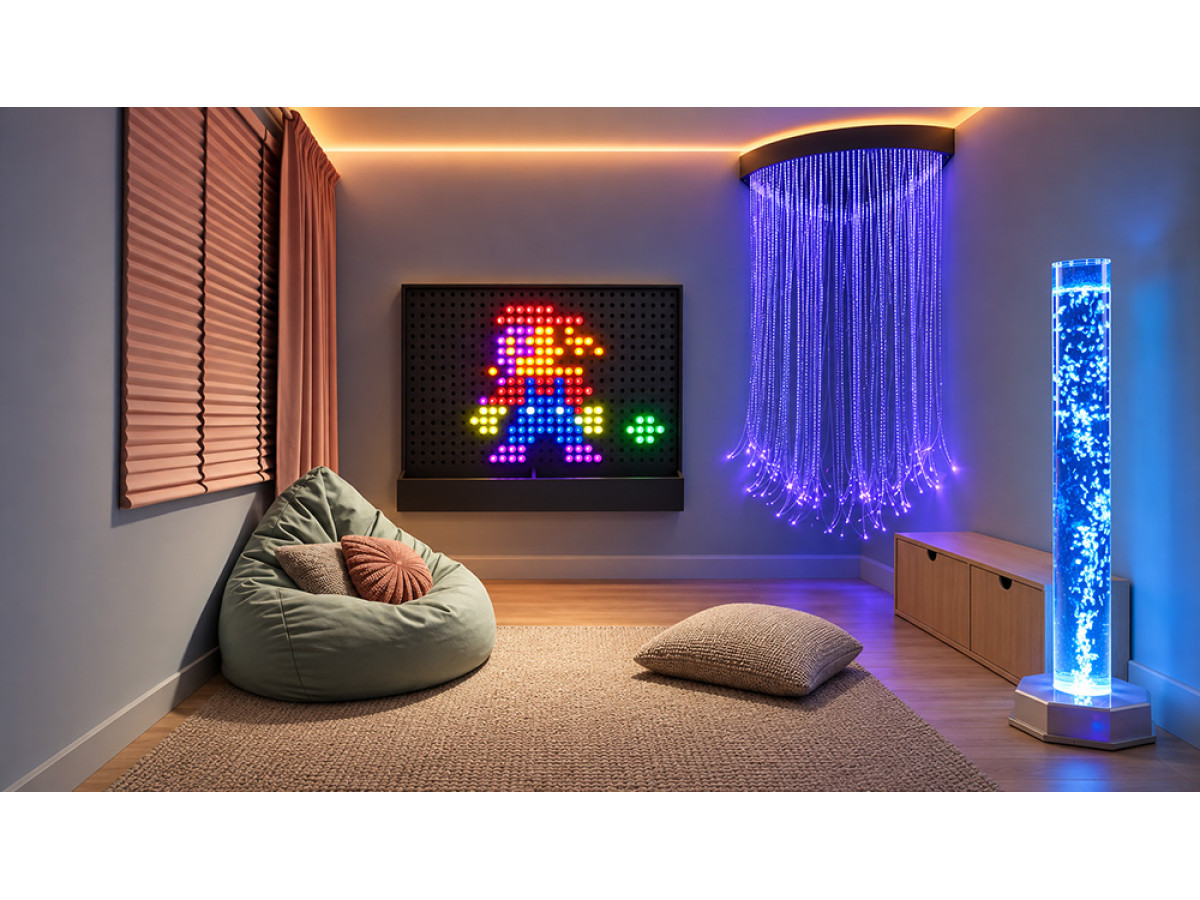
A sensory break room is a small space set aside for a short sensory reset. It is not a full session. It is usually a corner, an alcove or a repurposed room. A full sensory room is planned and built from scratch. A sensory break room is not. Schools, offices and clinics use one to give someone a quiet five or ten minutes away from a noisy hallway, open-plan floor or busy waiting area. BumbleBeeSmart supplies the sensory wall panels, busy boards and light features that furnish a space like this.
What Makes It Different from a Full Sensory Room
A full sensory room is usually a dedicated room. It is planned and furnished with a mix of equipment across several categories, as covered in our guide to what should be in a sensory room. A break room is smaller in scope on purpose. It is meant for a quick visit between classes, meetings or appointments. It is not a planned activity session. Many buildings that cannot spare a whole room for sensory equipment can still fit this kind of space into an existing nook, a quiet classroom corner, or a small unused office.
Because the visit is short, the room generally holds one or two pieces of equipment. A full equipment mix is not the goal. A fast, low-effort reset is.
Who Uses a Sensory Break Room
In schools, this kind of space gives a student somewhere to step away from a loud classroom or hallway for a few minutes. Teachers and aides often use it with students who have sensory sensitivities, including some autistic students and students with ADHD. Plenty of students without any diagnosis benefit from a short quiet break during a long day too.
In workplaces, the same idea serves employees managing a stressful shift, sensory overload from an open-plan office, or a condition that makes a loud, bright environment harder to work in. Our guide to who needs a sensory room covers this adult use case in more depth.
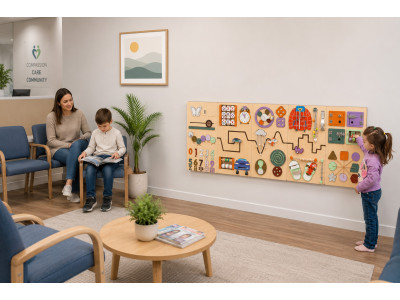
In clinics and therapy offices, a calmer space like this gives patients somewhere to wait or regroup. It sits apart from a busy general waiting area.
What to Include in a Sensory Break Room
The space is small. The visit is short. A tight, deliberate equipment list works better here than everything a full sensory room might include.
- One calming visual element. A single wall-mounted light feature, such as a fiber optic light fixture or an LED bubble wall, gives the room a focal point without taking up floor space.
- One tactile piece. A single sensory wall panel or busy board gives someone something to engage with hands-on, without crowding a small room.
- Comfortable seating. A bean bag, floor cushion or soft chair invites someone to sit and settle rather than stand and leave.
- Low, adjustable lighting. Harsh overhead fluorescent lighting works against the point of the room. A dimmer switch or a lamp instead of overhead lighting helps.
- A clear, simple layout. An open, uncluttered floor plan matters more here than in a larger room, so people can enter, sit and leave without navigating around equipment.
A space this size does not need a full sound system, a projector or multiple wall panels. Keeping the list short is part of what makes it fast to set up and easy to maintain.
Setting One Up in a School
This is often the practical starting point for a school that wants to offer sensory support but cannot give up a full classroom. An underused office, a corner of the library or a converted supply closet can all work. In a narrow converted room, a corner-mounted fixture such as the Fiber Optic Sensory Light Corner Shower uses a corner that would otherwise stay empty, as long as the ceiling is around 8 feet high. The space just needs to be quiet and able to be supervised. Most schools pair it with a simple pass or sign-out system, so staff know who is using it and for how long. For a school planning a larger, dedicated room instead, our guide to building a sensory room in schools covers budget, layout and district approval in more depth.
Setting One Up at Work
Workplace versions are usually smaller still. Sometimes it is a converted phone booth, a wellness room or an unused office. The same core approach applies: one visual element, one tactile element, comfortable seating and adjustable lighting, scaled to the space available. Keeping it separate from a general break room or kitchen matters. The goal is quiet and reduced stimulation, not a social space.
A Few Rules of Use
A shared space like this tends to work better with a few simple ground rules posted on the wall. Keep food and drinks out, since spills near electrical equipment are a hazard. Limit visits to a set window, usually five to fifteen minutes, so the room stays available to others. Wipe down tactile equipment periodically, following the care guidance for the specific panel or busy board in use. A simple sign-out sheet keeps use fair across a shared building, and it tracks how the space actually gets used over time.
Frequently asked questions
What is a sensory break room?
A sensory break room is a small space, usually a corner, alcove or converted room, set aside for a short sensory reset of five to fifteen minutes. It differs from a full sensory room mainly in scope. It holds one or two pieces of equipment rather than a full mix, and it is meant for a quick visit rather than a planned activity session.
How is this different from a sensory room?
A full sensory room is typically a dedicated space furnished with several categories of equipment for an extended session. A break room is smaller and simpler by design. It is built for a brief visit between classes, meetings or appointments rather than a longer activity.
Who uses a sensory break room?
Schools, workplaces and clinics all use them. Students use them for a quiet break during a school day. Employees use them to step away from a loud or bright workspace, and clinics use them to give patients a calmer space than a general waiting area.
How much space does it need?
It can fit into a small office, a converted closet or a quiet corner. It does not need the floor area a full sensory room would, since it is designed to hold only one or two pieces of equipment at a time.
Related reading
Educational guide from the BumbleBeeSmart blog. This article describes general sensory break room concepts and equipment categories. It is not medical advice and does not replace guidance from a qualified occupational therapist or other healthcare professional.




Write a comment