


The best sensory wall panels for kids are durable, modular, wall-mounted systems that support calm, inclusive, hands-on learning every single day. High-quality panels are built for repeated daily use. They give children fine motor practice and favor intentional tactile activities over screens and loud sounds. The most effective ones can be rearranged or expanded over time. That makes them a good fit for preschools, neurodivergent children, and shared public spaces. This guide breaks down what separates the best sensory wall panels for kids from ones that look good in a photo but don't hold up.
Who sensory wall panels are really for
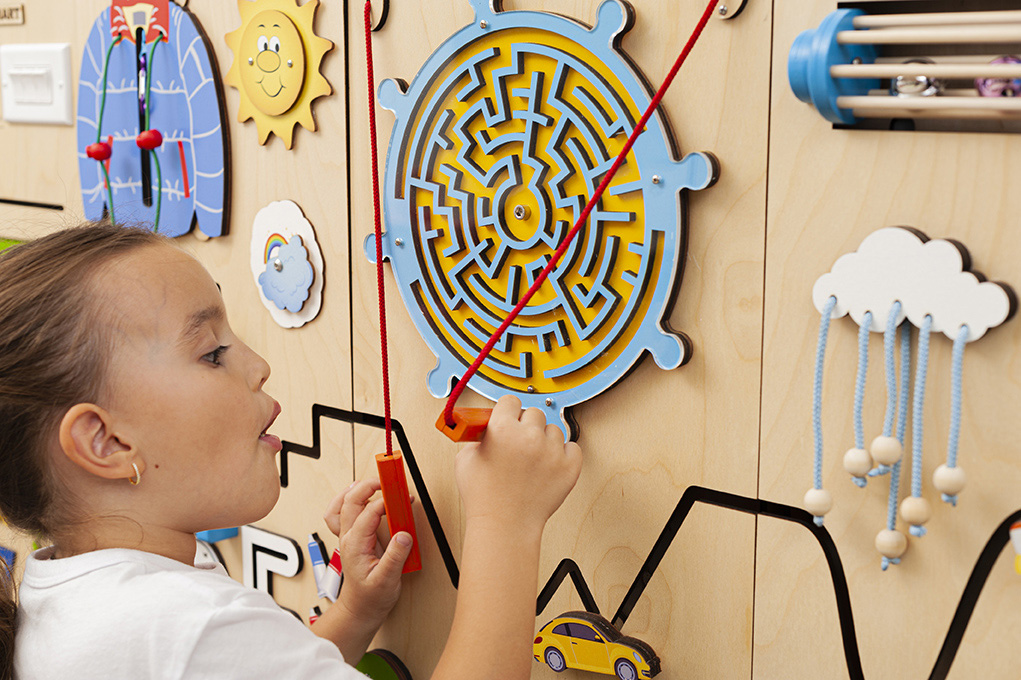
Sensory wall panels suit children from around one year old, once they can stand and reach. They are especially valuable for preschool-aged children between three and five. They also suit neurodivergent children who benefit from predictable, calming interaction. And they work well in shared spaces such as clinics and schools, where children of different ages use the same environment.
In these settings, a sensory wall isn't a novelty item. It becomes part of the space, something children return to repeatedly. That long-term, everyday use is exactly why thoughtful design matters more than visual impact.
Still deciding whether a wall panel is the right kind of toy at all? Our guide to the best toys for sensory development compares panels with floor-based options, sorted by sense and by age.
What actually makes a sensory wall panel "the best"
BumbleBeeSmart panels are handcrafted by a small team. We refine each design through feedback from parents, educators and therapy settings that use our panels every day (see our story). That feedback points to three factors that matter more than how a panel photographs: durability, modularity and intentional design. These are the real markers of the best sensory wall panels for kids.
Durability is the foundation. Panels in classrooms or public spaces get used constantly. Materials, hardware and construction all need to hold up to that level of daily interaction without degrading.
Materials matter here too. BumbleBeeSmart panels are made of wood sealed under a water-based lacquer. Locks, latches and gears are securely attached, so they hold up under repeated daily use. Our safety and materials guide covers the full specifications, along with cleaning and care.
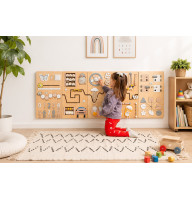
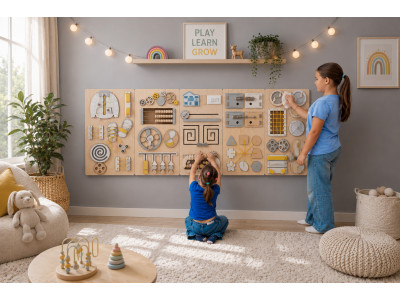
Modularity matters just as much. A modular sensory wall lets individual panels be rearranged, replaced or expanded over time. Our DIY sensory wall panel kit is one example: you compose your own wall from 24 panels and can add or swap panels later. As children grow, or a classroom or clinic changes, the wall can change with it. A fixed, one-piece busy board can't offer that.
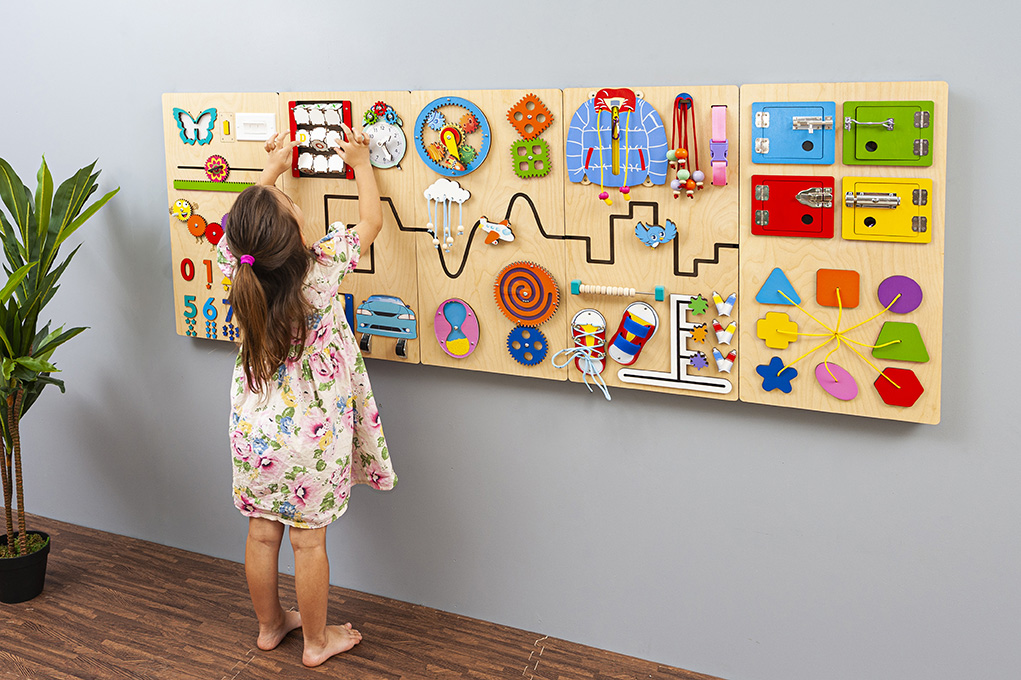
Intentional design is the third factor. More elements don't automatically mean better learning, and the best sensory wall panels for kids keep each activity purposeful. Many small busy boards are crowded with unrelated components that add visual and sensory noise without a clear purpose. A well-designed sensory wall panel focuses on meaningful fine motor activities and clear cause-and-effect interactions. That lets a child engage without becoming overstimulated.
Common mistakes to avoid when choosing a sensory wall panel
Parents and educators often come to us after being disappointed by other products. Cheap busy boards tend to break quickly or become loose and unsafe. Some panels are too noisy or visually overwhelming, which can be especially difficult for neurodivergent children. Others are too small to hold a child's interest for long, or simply aren't designed to be safely wall-mounted in the first place.
Another common mistake is choosing a design that leans on novelty instead of calm, intentional interaction. A non-modular product that can't adapt or expand tends to lead to the same outcome. The product life is short, and the result feels disappointing once the initial appeal wears off. In shared settings, also check how easy a panel is to wipe down between users. Product photos rarely show it, but it matters every day once the panel is installed.
Inclusive design is not an add-on
Genuinely well-designed sensory wall panels are inclusive by default. The best sensory wall panels for kids avoid screens, loud electronic sounds and one-off novelty features. Instead, children get calm, tactile experiences that support focus and independent play. This approach is especially relevant for autism-friendly settings. But it also creates a better environment for every child using the space, not just those with a diagnosed sensory need. Calm, predictable interaction isn't a limitation. It's what makes a panel usable every day, not just for the first week.
Themes, colors and customization
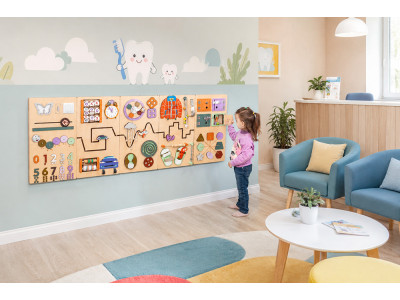
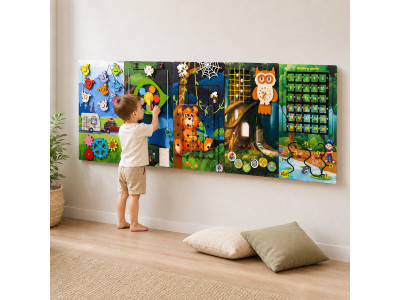
Even the best sensory wall panels for kids come in a range of finishes. The choice affects look and price more than durability. A painted base gives a solid color with painted design elements. A printed base uses a printed image under the mounted tactile elements. An unpainted base keeps the natural wood grain, with elements mounted directly onto the bare birch.
Beyond finish, many collections come in theme-shaped panels, such as safari, space or ocean sets. A theme gives a room a cohesive look without changing how the panel works. A themed panel and a plain natural one are built the same way underneath. The choice comes down to what fits the room, not what performs better.
Safety and wall-mounted installation
Wall-mounted sensory panels are a good fit for shared spaces. They save floor space and reduce tripping hazards. They can also be installed at the right height for the children or adults using the room. A well-designed sensory wall system is built from the start to be mounted securely, not adapted as an afterthought. Our installation guide covers the mounting steps and hardware in detail.
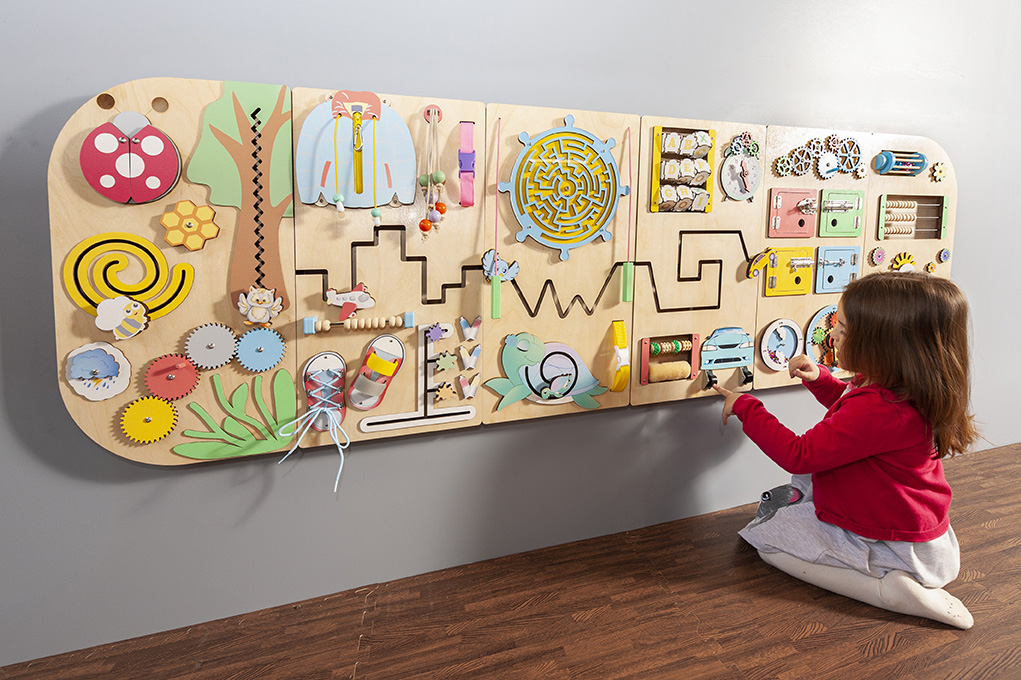
When safety, layout and materials are considered together, the best sensory wall panels for kids feel like a natural, permanent part of the room. It shouldn't feel like something bolted on as an afterthought.
Not sure how many panels will fit your wall? Our guide to choosing sensory wall panels walks through a short measurement method you can use before you buy.
Ready to find the right panel for your space?
Browse the full collection to compare the best sensory wall panels for kids by theme, size and finish. Or get in touch if you're planning a custom multi-panel wall.
Frequently asked questions about choosing a sensory wall panel
What age are sensory wall panels best for?
Most children start using sensory wall panels around 12 months, once they can stand and reach. They work especially well for preschool-aged children, roughly three to five years old. For a closer look at age-appropriate choices, see our guide on what age is best for a busy board.
What makes a sensory wall panel "modular"?
A modular panel is built to connect with additional panels rather than exist as one fixed piece. You can start with a smaller installation and expand it later. You can also swap individual panels as a child's interests change, instead of replacing the whole wall.
Are sensory wall panels safe for shared or public spaces?
Wall-mounted panels built for daily use hold up well in shared settings, since they're designed for constant interaction rather than occasional home use. Secure mounting and sturdy hardware matter more here than in a single-family home. Check that the panel is designed to be wall-mounted from the start, not adapted afterward.
How many panels do I need for my space?
It depends on your available wall width and how many children will use the wall at once. The sizing guide linked above walks through a short measurement method. As a rough starting point, a single panel or small set suits a home playroom, while classrooms and therapy rooms usually need a larger multi-panel set.
What's the difference between a sensory wall panel and a busy board?
The terms overlap, and many people use them for the same thing. A busy board usually means a board of hands-on activities like latches, gears and switches, sold as a single board or a set. A sensory wall panel stresses the wall format: panels designed to be combined into a larger installation that can be expanded or fitted to a specific wall size.
What materials are sensory wall panels made from?
BumbleBeeSmart panels are made of wood sealed under a water-based lacquer. Locks, latches and gears are securely attached so they hold up under daily, repeated use in a classroom or clinic as well as at home. Our safety and materials guide covers the details.
Do sensory wall panels help children who get overstimulated easily?
Panels built around calm, predictable tactile activities are often easier for an easily overstimulated child to engage with. Busier, novelty-driven toys with screens or loud sounds can be harder. That's a design choice, not a medical claim. A child with a diagnosed sensory processing need should still be guided by their therapist or care team.
Related reading
Still deciding what's right for your space?
Reach out and we'll help you plan a layout that fits your wall, your budget, and the children who'll be using it.
Educational guide from the BumbleBeeSmart blog. This article describes general product design considerations and is not medical advice.




Write a comment